
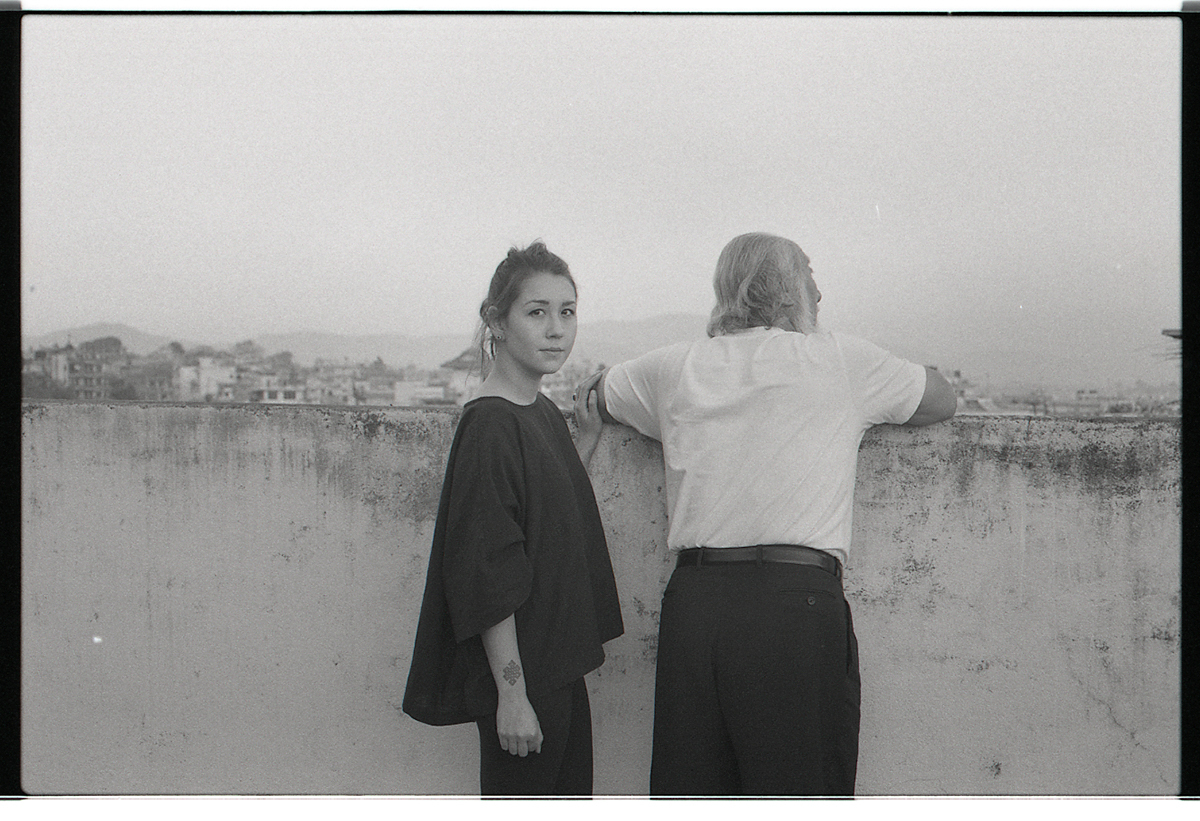
Photo from the series Pala and Me, by Lodoe Laura, 2016.
What is the meaning of a homeland if one cannot physically visit it, says curator Fuyubi Nakamura of her vision behind Entangled Territories: Tibet Through Images. On display at the University of British Columbia’s Museum of Anthropology (MOA) until March 29, the exhibition reflects on Tibet’s cultural history and the Tibetan Canadian identity.
“I really wanted to show Tibet from Tibetan perspectives, through their own lenses and voices,” Nakamura shares. “I wanted to think about what homeland means to them: Tibet is their homeland, but they have never been there.”
“Getting to be part of this project felt validating,” says Dorjee Dolma, one of the curator’s student collaborators. “I often see projects about Tibetan people [or] news articles, but it’s never something I’m directly a part of…this project gave me that opportunity.”
The MOA will host “Entangled Territories: Conversations on Home + Diasporas” on March 11 at UBC’s Liu Institute for Global Issues—a discussion on diasporic Tibetan community’s ideas of homeland. Nakamura will facilitate a panel discussion featuring writer Tsering Yangzom Lama and socio-cultural anthropologist Kabir Mansingh Heimsath on March 14, followed by a curator tour.
A community-based approach
A UBC associate professor, Nakamura’s interest in Tibetan culture began in 1995. At the time, she was a graduate student in Oxford studying under a Tibetan specialist.
The curator originally wanted to work with Tibetan artists; she had met artists in Lhasa during a 2010 trip to Tibet. However, Tibet’s political situation made it difficult to connect with these artists.
A colleague then suggested that she focus on the Tibetan Canadian community—introducing Nakamura to students at the Lodoe Kunphel Tibetan Language School.
“I first invited them to come to the museum to see the Tibetan collection,” she shares. “I asked them to select a particular Tibetan object of belonging that they wanted to display for the exhibition.”
The students then wrote reflections about their chosen objects—which became labels for the exhibition. The curator adds that some students selected “fancy, elaborate robes,” while others chose “small objects.”
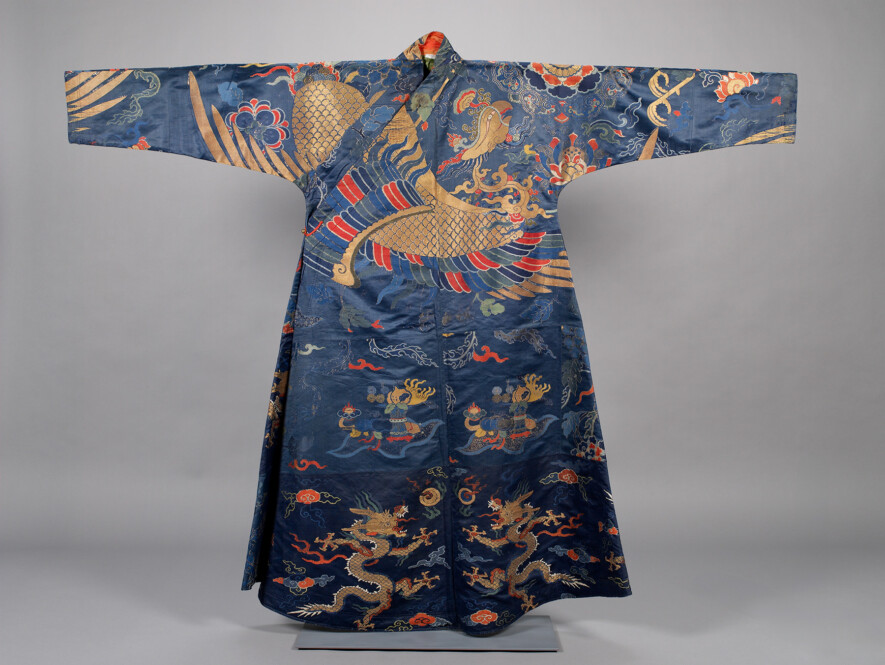
“These robes were donated by the Yuthok family who are descendants of the 10th Dalai Lama,” the curator shares of the Yuthok Collection, which is now considered Canada’s cultural property.
Dolma selected a bone ornament used in rituals. Despite not knowing its cultural significance at first, she was drawn to the object’s beautiful craftsmanship.
“It stood out to me because it was made out of bones,” she recalls. “My parents told me it was supposed to be used for secret ceremonies—it’s used to symbolize and show people the impermanence of life.”
Dolma had been attending the local Tibetan language school for nearly four years. She moved to Vancouver at the age of seven, leaving behind a big community of Tibetans.
“Getting to interact, discuss, or view my own heritage in a setting like the university museum was definitely impactful,” she shares. “It was only ever something I saw at home and talked about at home with my parents.”
Engaging younger generations
Nakamura also asked the two Tibetan Canadian artists involved in the exhibition—Kunsang Kyirong and Lodoe Laura—to select objects. Based in Toronto, Laura is of mixed Tibetan and British Canadian heritage. Four of her works exploring ancestry, tradition and identity are on display as part of Entangled Territories.
“One significant and horrifying way of protest has been self-immolation,” Nakamura shares of the context surrounding Laura’s 169, a large installation featuring portraits of protestors. Twelve selections from this work are on display at MOA. “[The title] is the number of people who have self-immolated.”
The exhibition also contains two short films from Kyirong. The first-generation Tibetan Canadian filmmaker is from Vancouver. Kyirong’s Letters from Tibet combines photographs of Tibet taken by British officer Eric Parker with clips from Frank Capra’s Lost Horizon (1937).
For the curator, these two artists’ involvement geographically extends the exhibition’s focus into exploring the Tibetan diaspora across Canada.
“One of the most inspiring things about the project were the artists involved, especially the fact that they were young female Tibetan artists,” Dolma adds. “It’s been lovely seeing younger people showing interest in their culture.”
The entire exhibit—including the labels and publications—are in both English and Tibetan. This choice was an important “ethical and decolonizing statement” for the curator.
Nakamura adds that many of the younger Tibetan generation were born in India, then migrated to Canada. Getting a visa and the required special permission to visit Tibet can be challenging—even for those with Canadian passports.
“That’s why collaborating was really crucial to developing this exhibition,” Nakamura adds. “It’s coming from them.”
The Tibetan Language School is supported by the Tibetan Cultural Society of British Columbia. Incorporated in 1981, the Society connects local Tibetans, most of whom reside in Surrey, New Westminster and Vancouver.
“Close to 200 members are part of the Society, but overall, in B.C., there may be closer to 500 Tibetan people,” says Ngawang Garie, vice-president of the Society.
According to Garie, the Society started with just five or six families who had already been informally gathering as early as 1979. Their goal is to preserve Tibetan culture through language, music, dance and social programs.
“It’s wonderful that people are talking about [Tibet] and sharing different parts of the culture,” he shares, adding that the Society is in need of its own cultural centre.
“The Tibetan diaspora is special and unique—anywhere you go in any part of the world, if there are enough Tibetans to form a small group, it will turn into a community,” Dolma reflects. “When you don’t have a country to call home or something to have a connection to, the people become your connection: there’s a very strong sense of community.”
For more information on the exhibition, see https://moa.ubc.ca/exhibition/entangled-territories/.
For more information on the Tibetan Cultural Society of BC, see https://www.tcsofbc.org/.


Comments will load once you reach the end of the article.