
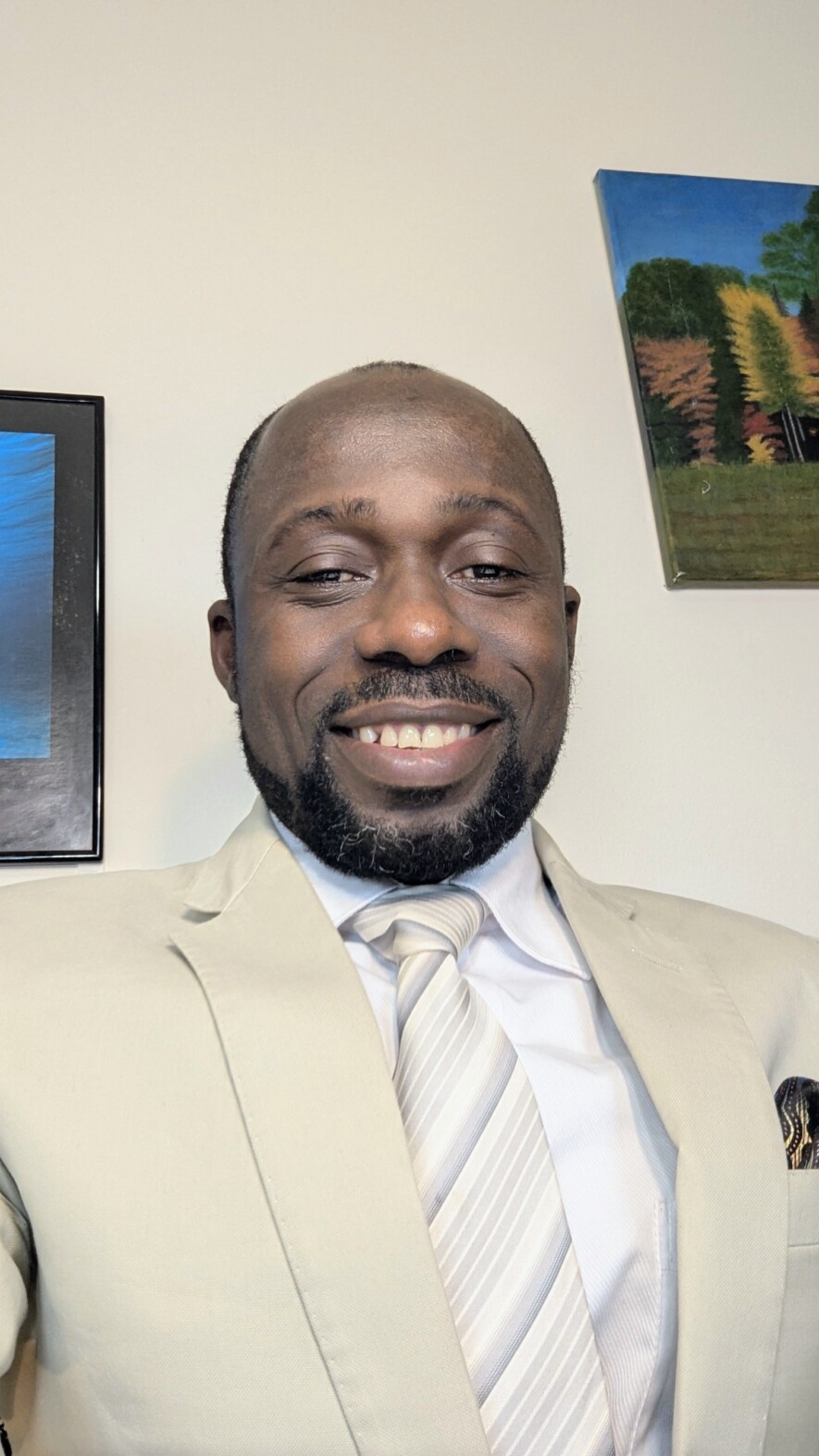

Benedicta Akley-Quarshie of Akofena Afro-Theatre Society| Courtesy of Benedicta Akley-Quarshie.
The story of Ananse is one of daring to achieve something, says Stephen Yaw Oppong, artistic director of Akofena Afro-Theatre Society. The company presents Black Futures, Ananse Tales: Diasporic Storytelling in Motion (Feb. 5) at the University of British Columbia’s Museum of Anthropology (MOA).
“Ananse really works into the survival techniques of Black people—we should use our wisdom to survive,” says Oppong.
The performance follows traditional Ghanaian storytelling practices, including improvisation and breaking of the fourth wall.
A universal figure
In the traditions of Ghana’s Akan peoples, Ananse—representing the complexities of human nature—is a spider-like, witty trickster figure. The word “Anansesem” refers to a storytelling tradition connected with this character.
Oppong and the Society’s Applied Theatre Director Benedicta Akley-Quarshie see the figure as a unifying force for Black communities—from African countries to the Caribbeans and Americas.
“What does the resilience and sustainability of this tradition tell us about how Africans or Black people around the world should conduct themselves—against the harsh conditions [that put] the Black population on edge?” asks Oppong.
“A Black person from Jamaica is different from a Black person from Ghana, culturally, but it’s good to be reminded of some of the things that link us together,” adds Akley-Quarshie.
Oppong adds that Ghana’s position as the epicenter of the transatlantic slave trade led to stories of the figure being transported outside of Africa.
“In the Caribbean, where he had to travel from Ghana through the Atlantic slave trade system, Ananse is seen as a resilient, rebellious, politically liberating figure that stands against the colonial master,” says Akley-Quarshie. “In Ghana, we see the more tricky, mischievous side to Ananse.”
She adds the character Ananse also takes on different names depending on location. In South Carolina, for example, the character is called “Aunt Nancy.”
“I built this play as a myth behind the mythical figure, Ananse,” shares Oppong. “How he became who he is in our stories—that is the story we are going to tell.”
Oppong’s inspiration for the project came after reading how younger Africans are less likely to identify with Ananse. Traditionally, in Ghana, the character is used in moral storytelling—instructing children to not follow in his footsteps.
For the artistic director, Ananse has also used his wisdom correctly, particularly in surviving.
“My point has been: Why do we not tell good stories about him?” Oppong reflects. “His form is the spider web—that web connects different species, that’s exactly what Ananse has done: connecting all Africans.”
Reviving roots
Ananse is also a central figure in studio Ghanaian theatre—a form of theatre that resembles western theatre. Oppong adds that following Ghana’s independence from British colonial rule, there was a need to establish a Ghanaian theatre “based on western models.”
Efua Sutherland, the mother of Ghanaian theatre, adapted the character of Ananse into this setting. Akofena Afro-Theatre Society’s goal is to place Ananse back in his traditional storytelling context—a move Oppong sees as encouraging people to “connect with the roots of [their] stories.”
“This upcoming performance is a traditional storytelling session,” he says. “From time-to-time, this narrator is going to ask the audience questions, [and] the audience will have liberty to ask the narrator questions.”
At the MOA performance, actor Harmela Kassa will serve as the show’s only performer. The team has been training Kassa in traditional Ghanaian storytelling.
A good storyteller, for Akley-Quarshie, is adaptable, open to making mistakes and able to “go with the flow.” The narrator will present the story and represent different characters.
Musicians will also interrupt the show at select moments—inviting the audience to dance. According to Akley-Quarshie, another aspect of Ghanaian storytelling is its interdisciplinary nature—combining music, dance, theatre and visual arts.
“We are doing it together, and that’s why we call it applied theatre,” adds the artistic director, speaking of the collaboration between the performer and their community. “You don’t go into applied theatre to know what the outcome will be.”
“It’s a call and response between performers and audience,” adds Akley-Quarshie. “This is very much a community-based project.”
She adds that this approach takes theatre out of its traditional settings, applying it to different contexts with the goal of creating social change. As a young theatre company, the Society is looking for financial support.
They plan to bring these storytelling sessions to schools in B.C., sharing Ananse’s daring nature with students.
“Success is not found on a silver platter—it must be hard fought for, and that is what Ananse does in this story,” Oppong adds.
For more information on the upcoming performance, see https://moa.ubc.ca/event/black-futures-ananse-tales-diasporic-storytelling-in-motion/.
For more information on Akofena Afro-Theatre Society, see https://akofenaafrotheatre.com/#events.


Comments will load once you reach the end of the article.