
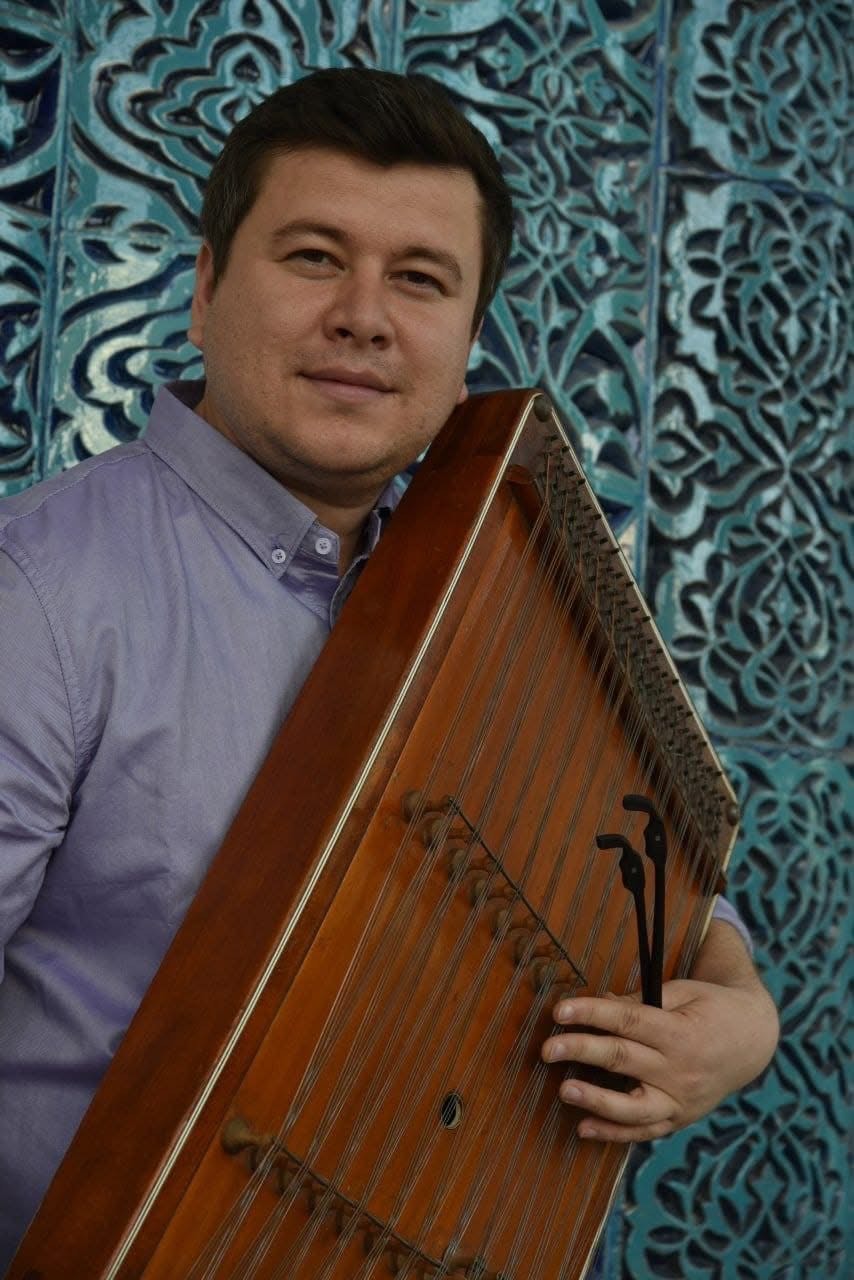
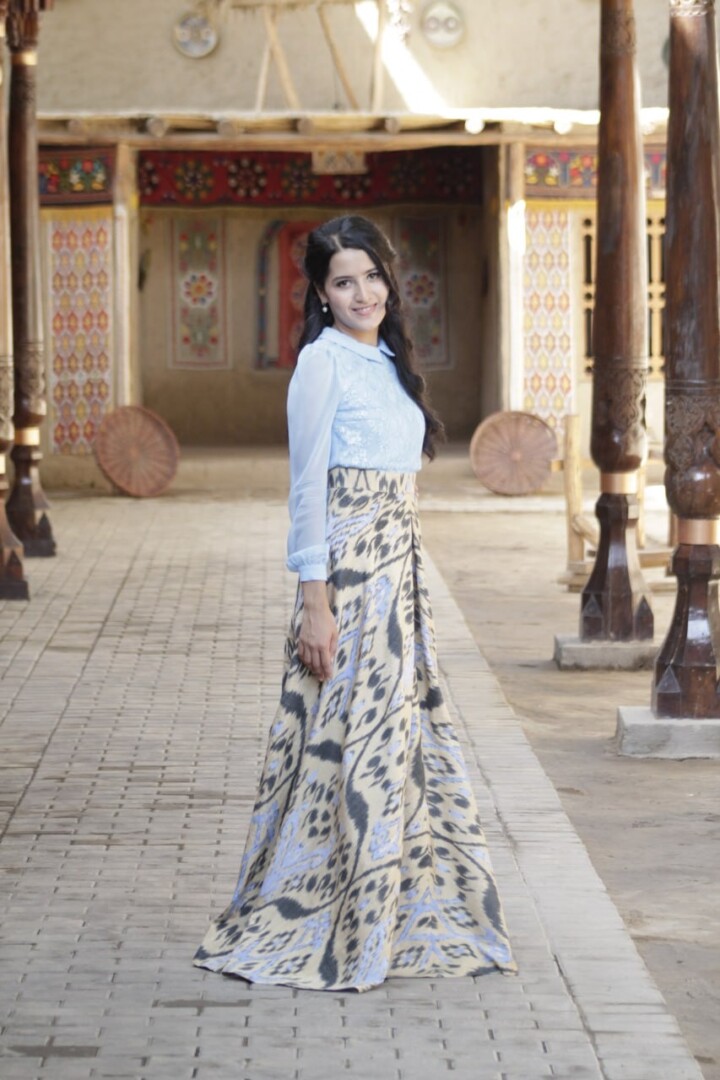
Khurshida Djuraeva | Photo by Bobir Pulatov.
Vancouver Inter-cultural Orchestra (VICO) presents Global Soundscapes Festival (June 11-14) at The Cultch’s Historic Theatre—showcasing classical and world music from Asia, the Middle East, Europe and Canada. Ravshan Tukhtamishev who plays the chang—a traditional Uzbek hammered dulcimer—will perform with Khurshida Djuraeva and Jonathan Bernard (Tukhtamishev Trio) on June 11.
“At Global Soundscapes, listeners can expect a program featuring traditional maqom music, which originated in the court culture of Samarqand and Bukhara in the 18th century, alongside traditional and folk music that is distinctive and rarely heard outside the region,” says Tukhtamishev. “The performance will showcase rich musical dialogues and some of the finest examples of Uzbek music.”
Their performance will combine sounds of the chang, dotar and doira with voice—creating what Tukhtamishev calls “a unique musical combination.” The double bill concert will also see Tukhtamishev and Saina Khaledi performing with Montreal-based santur musician Amir Amiri.
An expressive instrument
Tukhtamishev started playing the chang at a young age in Uzbekistan. He then received professional training in the instrument. At the time, the country’s music education system was still heavily influenced by its Soviet era—an experience that provided Tukhtamishev with “a solid musical foundation.”
“[The chang] is played by striking metal strings with two lightweight wooden mallets,” he says. “The instrument has a bright, resonant sound and is capable of both delicate melodies and complex rhythmic passages.”
He is drawn to its “expressive range.” This range, he says, allows for unique combinations of “rhythm, melody and emotion.”
“Its rich overtones can sound both melodic and percussive; its wide range makes it well suited for contemporary music,” Tukhtamishev adds. “I also enjoy introducing audiences to an instrument that many people have never listened to and seen before.”
According to the musician, the chang holds an important role in Uzbek musical culture, having been played for centuries. It is associated with the culture’s folk music and classical maqom traditions.
“Within maqom ensembles, the chang often occupies a central role, connecting the other instruments through its dynamic and technical capabilities while helping to lead the ensemble,” Tukhtamishev says.
Continuing traditions
Tukhtamishev’s wife and fellow trio member, Djuraeva, was a singer in Uzbekistan. She also plays the dotar. Their musical collaboration began following a move to Vancouver.
“She was performing her original songs on television in Uzbekistan and had already gained considerable recognition and a loyal audience,” Tukhtamishev recalls. “Meanwhile, I was working in Tashkent as a solo chang player with the Omnibus Ensemble.”
With the Tashkent-based Omnibus Ensemble, Tukhtamishev performed at festivals around the world—including in Amsterdam, Dresden, Berlin, Taipei and Moscow.
“I have had opportunities to perform traditional Uzbek music, European classical music, and later contemporary music, which have allowed me to introduce the chang to new audiences around the world,” the musician adds.
Tukhtamishev was introduced to the third trio member, Bernard, through VICO artistic director Farshid Samandari. Bernard plays the Uyghur doira (a percussion instrument).
“[Bernard] has a deep appreciation for both Uyghur and Uzbek musical traditions,” Tukhtamishev shares. “When VICO invited Khurshida and me to present a concert of Uzbek music, I suggested including Jonathan as well, as his doira playing and rhythmic contributions would enrich and complete our sound.”
The trio’s goal, Tukhtamishev adds, is to deepen “artistic dialogue” while preserving this rare traditional music. They wish to share these traditions with future generations.
At Global Soundscapes Festival, Tukhtamishev is looking forward to audience connections. He sees the festival’s diverse and welcoming environment as a valuable opportunity for creating “meaningful cultural exchange through music.”
“My performance with Saina Khaledi and Amir Amiri will explore the musical connections between Central Asian, Persian, and other musical traditions,” he adds. “Audiences can expect a dynamic exchange of ideas, improvisation, original interpretations, and rhythmic diversity that highlight the richness of these traditions.”
For more information, see https://vi-co.org/global-soundscapes-festival-2026/.


Comments will load once you reach the end of the article.