
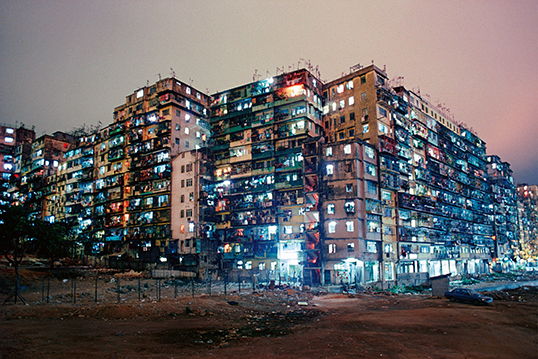
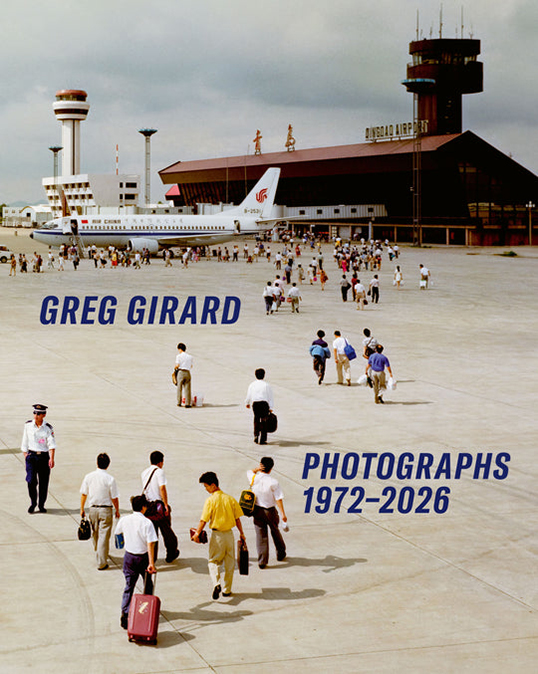
Greg Girard’s book Greg Girard: Photographs 1972–2026. | Photo courtesy of the artist.
Opening July 10 and running through October 25 at North Vancouver’s Polygon Gallery (101 Carrie Cates Ct.), Girard’s first career retrospective brings together more than 50 years of photographs, beginning with Vancouver in the 1970s and tracing his documentation of Asian cities as they transformed into today’s megacities. The exhibition follows the July 9 launch of his latest book, Greg Girard: Photographs 1972–2026 and marks a long-overdue survey of a photographer whose work, as Polygon curator Elliott Ramsey notes, has long received critical and institutional recognition.
“Greg has several very acclaimed photo books, many of which have sold widely and are now in their third or fourth printings even. [His] work has been collected by every major collecting institution across the country… [He] should have a major career survey. This had not happened yet.”
Documenting cities & the stories they tell
The motif of transformation is at the forefront of more than just Girard’s portfolio over the years. Within each shot lives a narrative of movement: a landing airplane, a dress in motion, a fixed gaze. Girard’s work frequently contrasts the harsh glow of kitschy city lights with the deep shadows they produce, conveying the dynamism of urban spaces alongside resilient corners of stillness. Though known for capturing physical space, Girard’s work tells an ultimately human story more intimate than postcard clichés. Each shot tells a story and contributes to a body of work that comes together to tell its own.
“Greg has often [organized] his work in a geographical way… [but] these aren’t photographs that the tourist takes home to show the people back in Vancouver,” Ramsey asserts.
“You’ll see his photograph and think about a relationship to how this place was at the time, how it’s changing, what was happening then. It has a resonance that goes beyond a snapshot. The photographs feel like portraits, even the ones that don’t necessarily center a human figure or a human likeness.”
A return home
Having first picked up a camera in the early 1970s as a teenager in Burnaby, Girard’s return to the Lower Mainland marks a return to where it all began. Despite decades spent on the other side of the Pacific Ocean, Girard’s Canadian roots have remained a constant in his career. Both the career survey and the book are a testament to these longstanding ties:
“Girard has been fairly consistently producing photo books. His first, Phantom Shanghai, a compilation of his photographs of Shanghai as it transformed in the era of globalization, was published with Magenta Foundation in Toronto,” Ramsey explains.
“It’s a relationship that Greg’s kept and cultivated with the publisher, MaryAnn Camilleri, and the designer Gilbert Li.”
The Polygon Gallery, too, is no stranger to Girard’s work – having long featured the photographer’s photobooks on its shelves.
“At the Polygon Gallery, we have the Diane Evans bookstore that’s always been a core pillar of our organization here. Naturally, we’ve always carried Greg’s books. They’ve always been some of the most popular books in the store. So, when we decided to do this career survey for Greg, we obviously had to work with MaryAnn because she’s been such a key part of his career over the last 20 years.”
As the Polygon Gallery presents Girard’s work, the exhibition welcomes photo enthusiasts to explore the photographs of a renowned artist and invites broader audiences to reflect on the evolution of cities across the ocean, as well as our own.
Through the snapshots of Vancouver in the 70s and archives of the Asian cities Girard explored, this career survey calls for reflection on the ongoing changes in our environment, and the constants that remain.
For more information on the Greg Girard Opening Celebration and Book Launch, see


Comments will load once you reach the end of the article.