
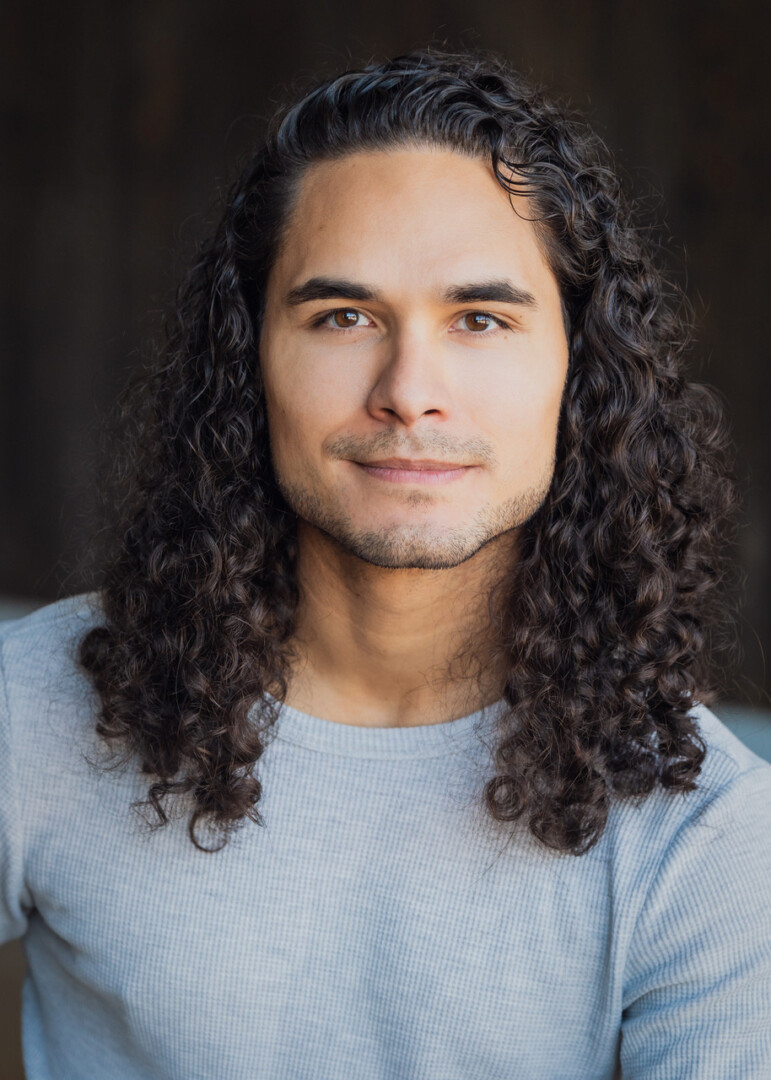
Cameron Fraser-Monroe | Courtesy of the artist.
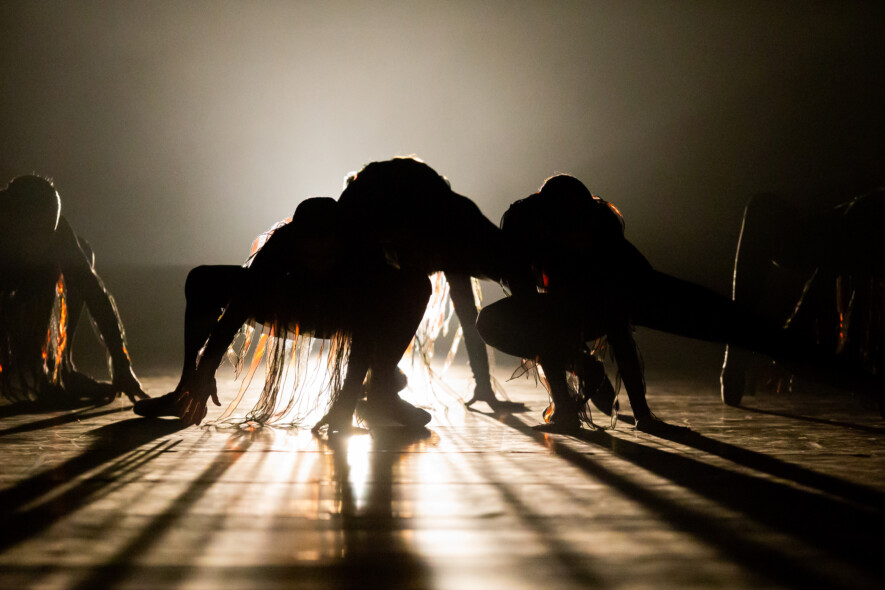
How would a figure known for eating children move on stage? This is a question dancer and choreographer Cameron Fraser-Monroe asked while creating T’əl: The Wild Man of the Woods. The Royal Winnipeg Ballet (RWB) presents Carmina Burana and T’əl: The Wild Man of the Woods Feb. 9 and 10 at The Centre in Vancouver for Performing Arts (also known as The Centre Vancouver).
“What does he smell like? How do people relate to him?” shares Fraser-Monroe of the thought process that went into choreographing T’əl. “Part of what’s so exciting about this work is that it is the full strength of the Royal Winnipeg Ballet.”
This B.C. tour will be RWB’s first in a decade to the west coast – outside of their usual
Nutcracker performance.
Indigenous collaborations
Fraser-Monroe was attracted to T’əl’s story for its ability to both frighten and delight audiences. In Tla’amin Nation’s oral history, T’əl —a “very ugly, hairy man”— was banished from the community.
The story goes that he now kidnaps children at night, holding them captive in the woods before devouring them.
“[He] glues them down with melted tree sap in order to [preserve] them before he’s ready to roast them over the fire and eat them,” Fraser-Monroe shares. “What interests me is that [the story] is also a tool to keep children inside before the sun goes down.”
The choreographer recalls hearing the story from his parents as a child. Fraser-Monroe also chose to centre his work on T’əl because of the figure’s universality.
“Depending on where you go, T’əl is a woman,” he shares. “That’s really something I love about this story—it’s culturally specific to the Tla’amin Nation, but it’s also quite universally appreciated. There’s always someone in the woods.”
The original story involves a pair of siblings. In his ballet, the main character follows T’əl into the woods after her sister’s kidnapping.
“[She] tries to negotiate for her sister’s release,” Fraser-Monroe shares. “While it sounds quite dark, there’s hope and excitement.”
T’əl will also appear on stage, dressed in “a beautiful cloak” designed by New York-based Navajo designer Asa Benally. Fraser-Monroe adds that T’əl’s basket of snakes are also transformed into characters.
“We don’t depict anything too graphic in terms of eating children; however, T’əl attempts to roast a sister over the fire,” he shares.
The performance will also feature an original score from Cris Derksen—a JUNO-nominated, two-spirit composer with connections to her Cree community.
“These are Indigenous collaborators, but they are also some of the best artists working on Turtle Island,” Fraser-Monroe shares. “These kinds of projects can foster deep connections between artists and really meaningful works of art.”
Moving between spaces
Raised in Vernon, B.C., Fraser-Monroe started dancing at the age of three. His first exposure to dance was through the Ukrainian tradition. He then learned Grass Dance from Elder Mollie Bono and Hoop Dance from Dallas Arcand.
His movement vocabulary draws on traditional First Nations dance, contemporary dance and ballet training.
“The vocabulary that I use is generally selected based on the character and the story that I’m trying to tell,” he shares.
Most of the 26 dancers in the upcoming performance are most comfortable in contemporary ballet. Fraser-Monroe’s T’əl also incorporates “basic steps from powwow” or movements according to beats of a drum.
“Most of the time ballet is representing hierarchical structures—like a court where there’s a king, lords and servants,” he shares. “This story called for a more community-centred, circular approach to the story.”
As the choreographer, Fraser-Monroe had to create space for all his dancers to express their personality and “bring themselves to the characters.” The work also allows him to explore both choreography and theatre.
“Theatre goes inside out: here are all the things characters say, and all the things characters do,” he says, adding that T’əl’s lack of backstory provided a starting point to explore characterization.
The performance will also involve narration from Elder Elsie Paul—paying homage to the Tla’amin Nation’s oral traditions. A fluent Ayajuthem speaker, she will narrate in Ayajuthem first, then in English.
“It feels like we’re in a living room all together, listening to Elsie Paul, but heightened by this reenactment of 26 dancers,” Fraser-Monroe adds. “We flow back and forth between these two spaces with massive, epic dancing and quiet narration with your grandmother.”
For more information, see https://www.rwb.org/performance/t%C9%99l-the-wild-man-of-the-woods-on-tour/.


Comments will load once you reach the end of the article.