
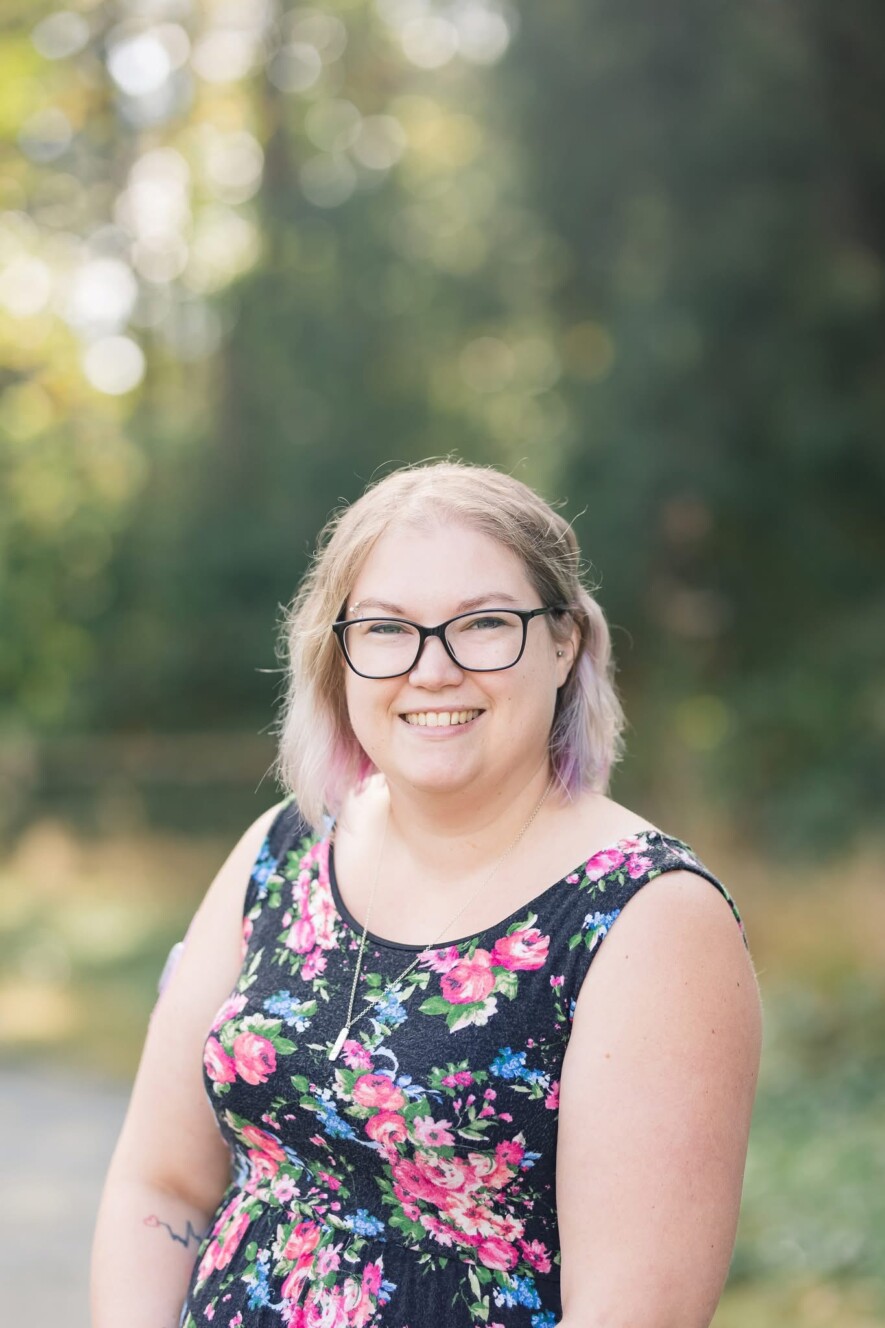

Natalie Woods | Courtesy of Natalie Woods and Stefanie Fournier Photography.
The provincial government recently announced changes in financial support for children with autism—shifting to a funding system focused on needs and not just diagnosis. This change intends to provide support for a broader range of families, particularly those with the highest needs.
Yet, local parents, such as Natalie Woods, are concerned that these changes mean their children will lose their current funding. Woods is the mother of two children with autism; their family currently receives support from B.C.’s Autism Funding and At Home Program.
“We’ve already gone through the process of having our kids diagnosed; we’ve gone through the government process of getting them access to support,” she says. “They’ve been qualified, and now that qualification is being removed.”
She would like to see the government expand their current support programs—while bringing already covered children into the new system instead of having them re-qualify.
Support for all
One avenue through which parents with autistic children can currently access financial support is through the Autism Funding program. This program will be replaced by the new B.C. Children and Youth Disability Benefit and B.C. Children and Youth Disability Supplement programs. The province expects these programs to be in effect provincewide by April 1, 2027.
Families have been told that a ministry worker will facilitate their transition; transition will begin in July 2026. Woods is concerned that this transition will create gaps in her children’s support.
“All of our children deserve support,” she adds. “This is really important, not just for my children and my friend’s children, but it’s also important for other families with children with disabilities who are wanting to get funding and deserve to have funding, but under this new service model, they’re not necessarily guaranteed to get funding.”
Woods shares that her eldest, who is considered high functioning, is likely to receive “no direct funding” as the government shifts to a needs-based system. Many parents of autistic children, she says, use this money to access occupational therapists, social skills programming, speech therapy, behavioural interventionists and other services.
The funding can also be used to purchase equipment, such as noise-canceling headphones.
“They’ve expanded to be eligible for more children with disabilities—which is amazing—we all support that,” Woods shares. “The problem with what they’ve done is that it’s not a true expansion—it’s a shift in where the money is placed and who is eligible.”
Calls for transparency
Another major frustration, for Woods, is the lack of transparent communication from the government. She adds that, on the surface, the new funding system may appear to provide more financial support to a wider range of families—yet, its needs-based focus can become a barrier.
“They’re using words like, ‘mostly,’ ‘some,’ or ‘a percentage’ rather than coming out with an actual list that says, ‘Here’s our criteria,’ so families can read it and understand whether their child is going to get access to it or not,” she says. “Right now, the criteria are not going to be finalized until March 2027.”
Woods points out how very young children cannot be assessed for intellectual disabilities—which is a potential barrier for accessing needs-based funding. She adds that it is also unclear how reassessment of children’s needs will occur.
“It’s really critical in the early years when they’re still developing to get as much support as possible,” she adds.
Woods is still uncertain as to what type of financial support her children will continue to receive once the new system kicks in. She would like to see the government provide children already receiving support with “legacy protection”—making them automatically eligible for new funding models.
“We support expanding services to more children with disabilities, but we don’t support it coming at the cost of the children who already rely on [these supports] today,” she adds.
April 2 is recognized by the UN as World Autism Awareness Day—highlighting autistic individuals’ right to full and equal participation in society. Woods encourages those who don’t have experience with autism to “ask questions and learn”—creating spaces that respect differences rather than misunderstanding them.
“Different doesn’t mean less,” she says, adding each autistic individual is different. “Autistic kids grow up to be autistic adults, and at every age, they want the same basic things we all do—to feel loved, heard, understood and included.”
For more information on the funding changes, see https://www2.gov.bc.ca/gov/content/health/managing-your-health/child-behaviour-development/support-needs/financial-supports.


Comments will load once you reach the end of the article.