
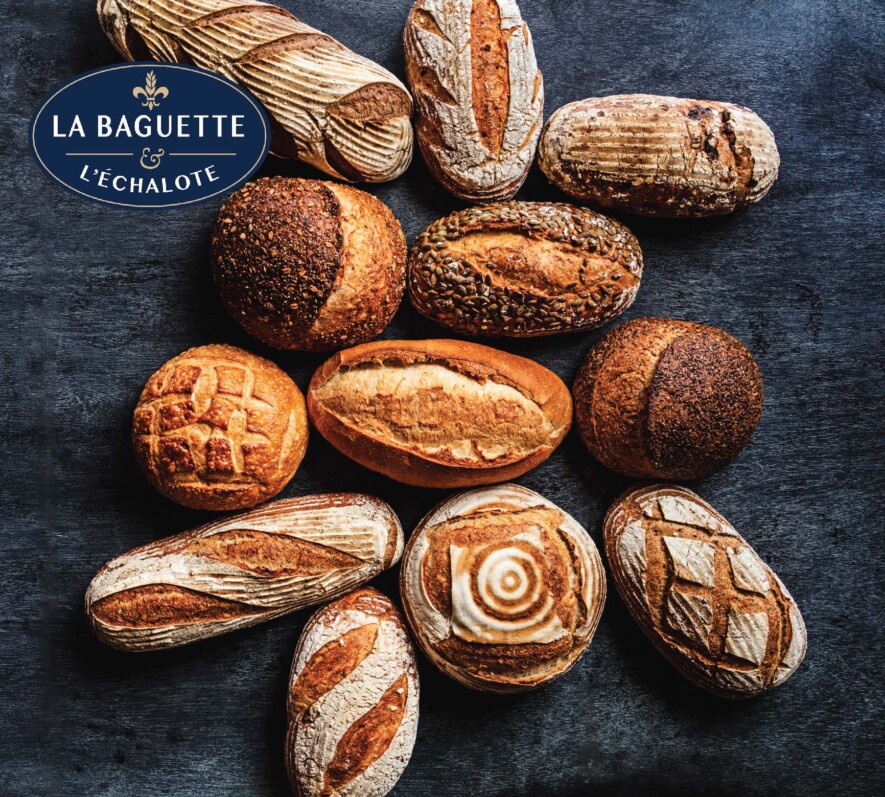
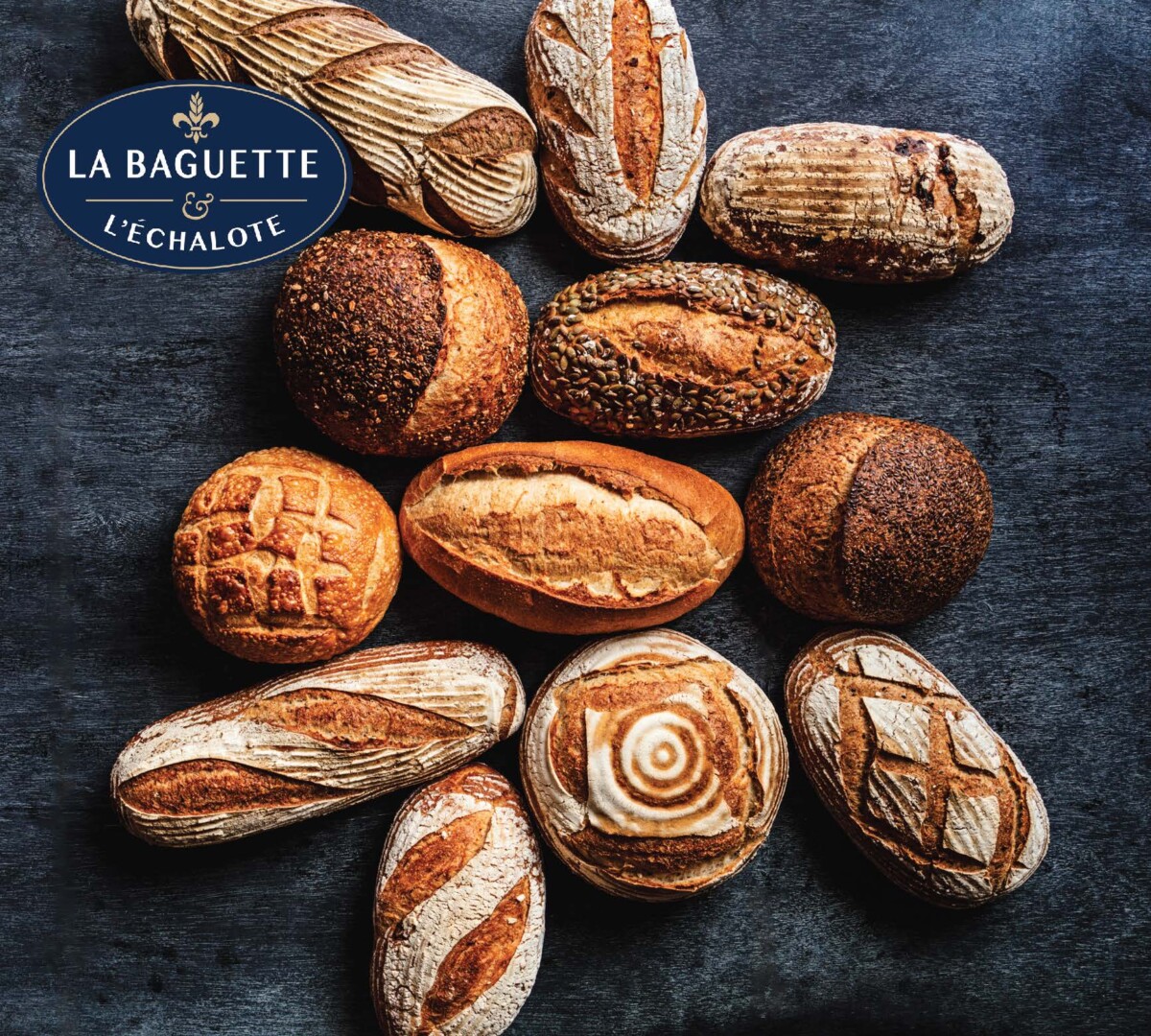
La Baguette & L’Echalote’s bread | Credit: Kevin Clark
The Canada Grocery Code came into effect Jan. 1, setting a framework for fair dealings between the grocery sector and their commercial partners. One of B.C.’s earliest signatories is French bakery, La Baguette & L’Echalote whose owners Cheryl and Eric Baranes see the Code as a step in the right direction.
“The Code of Conduct is to help suppliers [by encouraging] more tolerance and a way to have a discussion between the two parties,” says Cheryl.
For years, the co-owners have requested data—regarding customers, products and pricing—from their grocery store partners. This information would inform how the Baranes stock their grocery store shelves.
“We do welcome this Code of Conduct, very much so,” adds Eric, expressing the need to support small businesses. “There should be something there where you treat [small businesses] a little differently to make sure they have a chance to sell the products.”
Calling for transparency
La Baguette’s products can be found at big box and independent grocery stores across Greater Vancouver. The Baranes’ business operates on “guaranteed sales”: bread is delivered fresh in the morning and unsold products are taken back at their cost.
Unlike their restaurant clientele—where chefs communicate product preferences—the co-owners see grocery stores as a black box.
They heard about the Code from Martin Barnett, executive director and general manager of the Baking Association of Canada. Barnett encouraged Cheryl to sign up after hearing her concerns about their grocery accounts.
“I signed up right away,” she recalls. “The grocery store is just a small part of our business, but it is a strong business, and it helped us through Covid-19.”
The Baranes worry that their “privileged relationships” with big box grocers are becoming more corporate-heavy—with stronger headquarter pressure and smaller margins.
“[The corporate grind] goes against the purpose that we’re local [and] fresh,” Eric says. “Our customers love us.”
“We’ve been around for over 40 years, and we’re really proud of what we do,” Cheryl adds. “We bake fresh daily, we bake every night, the drivers come at 3 a.m., and they start delivering the bread—the old-fashioned way.”
Cheryl sees the Code as a precautionary measure, providing an avenue for conflict management. While La Baguette doesn’t have any issues with production, she notes that grocery stores can fine suppliers for late products.
“Before [the Code], if you had a conflict with a grocery store, there was really nowhere to go, no streams of help or organizations that could answer your questions,” she says. “The first step is to provide a way for there to be communication and some regulations.”
The Baranes rely on grocery stores to maintain product display and communicate with customers. While other parts of their business—including their partnerships with restaurants and cafes—have steadily grown, their grocery accounts have remained stagnant.
“We really don’t know how to make it grow, how to improve it,” Eric says. “It’s very, very different from a business-to-business [relation] where we have direct communication with customers who tell us what’s going on.”
Supporting local businesses
Another challenge is Canada’s lack of regulations surrounding bread products. Cheryl points out that, in France, the traditional baguette is regulated to have only four ingredients.
“[In North America], you can call something artisan even though it’s made by a machine,” she says.
Cheryl is part of the Real Bread Campaign, a U.K. initiative advocating for regulations and labelling of bread products. The Baranes acquired La Baguette from its previous owners in 2017. They recently acquired another local business, Tartistes—making pies, tarts, pastries and savoury items.
They have since expanded their product lines and increased staff. The co-owners are proud of their traditional approach to breadmaking—using minimal ingredients and human labour rather than heavy machinery.
“Our bestseller is the sourdough miche—it has three ingredients: flour, water and salt,” says Cheryl. “I would just encourage people to read the label: A good bread doesn’t need a lot of ingredients.”
They are also very proud of their buy B.C. approach. All their products—even the packaging—come from the province. Consumers can also order products for pick-up directly from their website.
“There’s room for improvement to help the stores sell the breads,” Eric says of their grocery store relations. “And for us, it’s important to have a fair chance to sell the products.”
He adds that their Pure Country 7 grains bread is another top seller at grocery stores. Like their sourdough breads, it has very few ingredients.
Their baguettes are also popular at grocery stores. La Baguette’s brioche hamburger buns—a pure butter French recipe—are a top seller to restaurants.
“If it’s not our bread, there are other brands that have good ingredients—it’s really worth it to invest and support those local bakeries,” says Cheryl. “We’re growing, but I want to continue doing what we do, fresh bread with minimal ingredients.”
The Office of the Grocery Sector Code of Conduct implemented the Canada Grocery Code and its Dispute Resolution Management Process on Jan. 1, 2026. The Code aims to encourage transparency, fairness and predictability in the grocery sector’s commercial relationships.
For more information on BLE Bakery, known as La Baguette & L’Echalote, see https://labaguette.ca/.
For more information on Tartistes, see https://tartistes.com/.
For more information on the Canada Grocery Code, see https://canadacode.org/.


Comments will load once you reach the end of the article.