

Jessie Adcock. | Photo courtesy of Vancouver Host Committee.
FIFA’s Vancouver Host Committee lead Jessie Adcock says, “We are incredibly lucky to have a culture of volunteerism woven into the fabric of our country.”
She recalls how volunteers’ “warmth, inclusivity and excitement” made the 2010 Olympic and Paralympic Winter Games “unforgettable.”
The Vancouver Host Committee received over 130,000 volunteer applications. Adcock notes that it will be difficult to select their final volunteer roster.
She adds that while the committee welcomes international volunteers, they are “happy to prioritize” those from local communities.
“A common theme we’ve seen is that applicants are generally excited to be part of this once-in- a-generation opportunity to welcome the world to Vancouver,” Adcock adds. “They also want to be part of making that experience inclusive and seamless for everyone – residents, visitors and fans alike.”
Leaving a legacy
Following FIFA guidelines, the Vancouver Host Committee looks for volunteers from all backgrounds, experiences and abilities – reflecting the diversity of the province. Selected volunteers will undergo online training modules tailored to the volunteer’s assigned role and venue.
“As a tournament volunteer, you may be stationed along key routes to the stadium greeting fans, providing accessibility guidance, sharing your tournament knowledge, helping with language support, managing accreditations, or volunteering in the heart of the action at the FIFA Fan Festival™,” adds Adcock.
Volunteers must be at least 18 years of age and meet other eligibility criteria. While English is required for most positions, the program sees knowledge of other languages as an asset.
Applicants from as far as Prince George and Vancouver Island were invited to their volunteer tryouts. For Adcock, volunteering not only strengthens local bonds; it also inspires continuous civic
engagement.
“Volunteers will also carry forward the skills, confidence and experiences they gain whether it is through future volunteer roles or professional opportunities, ensuring the benefits and skillsets sharpened through this program extend well beyond the World Cup,” she adds.
Preparing for emergencies
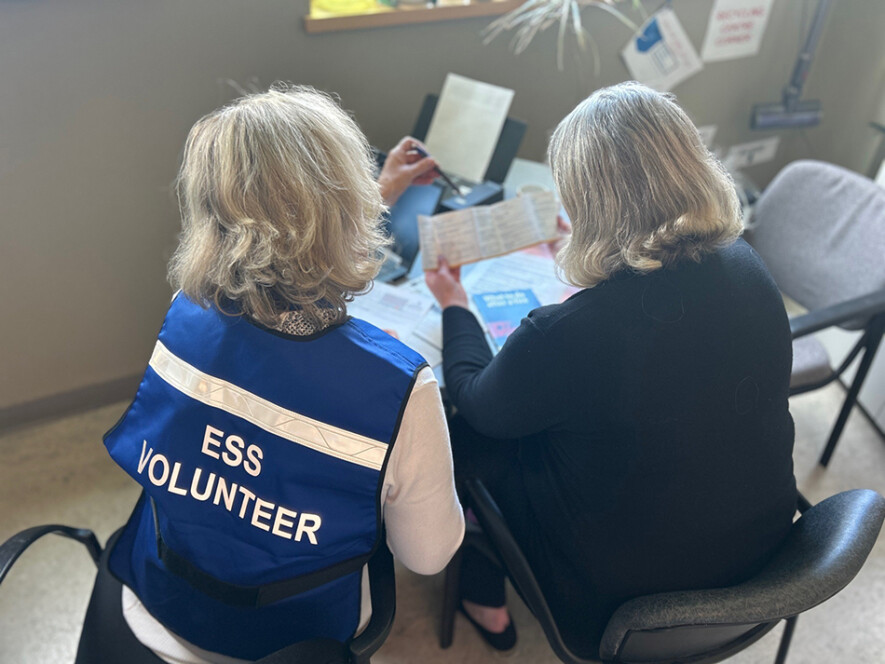
Cory Hansen, manager of New Westminster’s Emergency Management says the best part is making connections – either during events or preparing a coordinated emergency plan. The city relies on Emergency Support Services (ESS) volunteers acting as liaisons between evacuees and first responders during disasters.
Hansen defines a disaster as “a severe event” that has widespread impacts, including property damage, infrastructure failure and injury. ESS volunteers assist with evacuations and provide on-the-ground support at disaster sites.
“As part of our program, [volunteers] also attend events and provide emergency preparedness education to the public and community organizations,” she says. “They also coordinate the provision of primary services for evacuees and for those affected by an emergency, such as a house fire.”
Their responsibilities involve locating temporary shelter, food, clothing and incidentals such as toothbrushes and diapers. The New Westminster ESS volunteer team currently has 20 active volunteers. Hansen sees them as “integral” to their overall emergency management.
In addition to weekly on-call availability, the ESS volunteers regularly dedicate around four to six hours a month. This time goes to meetings, free training and exercises.
All volunteers must also complete a training program before they can respond to an emergency. A part-time ESS volunteer coordinator oversees the program, ensuring volunteers are prepared to respond at all hours.
“More hours may be required during larger emergencies or disasters,” Hansen adds. “Emergencies are unpredictable and can happen at any time – a challenge we face is that volunteers may be required during the middle of the night or on holidays like Christmas Day.”
Hansen’s team takes great care in selecting volunteers. Volunteers also learn transferable skills, including empathy, effective listening and organization.
“We do self-care training sessions, and our management team is trained to recognize the signs if someone is struggling and needs additional support,” adds Hansen, noting volunteers always work in pairs. “Helping people can be overwhelming and emotional, and we encourage our volunteers to support one another.”
Taking breaks to prioritize their well-being is also important. Hansen encourages those interested in volunteering to join their waitlist.
A community-responsive farm
Volunteers often say that they love being able to meet different kinds of people, says Sarah Wenman, executive director of Marpole neighbourhood’s Farmers on 57th, an urban farm situated on the site of a long-term care home for people with disabilities.
Wenman was one of the farm’s founders back in 2008; she had already been working with the care home’s residents. The farm itself was built in 2009.
“What’s more homelike than being able to tend plants outside where you live?” says Wenman. “Trying to find how to make it sustainable is a really big question for non-profits – I utilized volunteers from the very beginning.”
Her volunteers helped build the farm, turning existing lawns into viable soil and making the garden wheelchair accessible. Volunteers were also pivotal to saving the farm back in 2017. Just one year after the organization registered as a non-profit, they were told to move the farm by the site developers.
“The soil we had developed would likely need to be left behind, and we’d have to navigate the many challenges of moving infrastructure and developing a new farm site, without any funding,” Wenman recalls. “The project almost ended at that point in time, but it was our longtime volunteers who refused to let that happen.”
The farm’s Community Supported Agriculture (CSA) program – where consumers pre-purchase a weekly harvest box – is now key to their sustainability model. While not guaranteed, volunteers often receive parts of the harvest as well. They may also take-home flowers from the garden.
“Part of what we’re trying to do is to be a community-integrated farm, being responsive to what the community wants and needs is really what directs the program,” Wenman says, adding their vision of community extends beyond Marpole to the rest of Vancouver. “We hope it’s a model that can be replicated.”
Wenman’s team looks for volunteers who are available weekly throughout the whole growing cycle. The goal is to make volunteering a mutually beneficial relationship: volunteers learn about ecologically sustainable farming – without pesticides or fertilizers – while contributing to the program.
Most volunteers work on the farm: prepping, seeding and harvesting. Farmers on 57th also welcomes other volunteer work. Wenman adds that they meet volunteers “where they are,” allowing everyone to “give what they are best able to.”
Farmers on 57th provides volunteers with different tasks that allow them to gain experience and a variety of skills.
“We had someone volunteer to lead a sketching group in the farm site…bringing the community into the farm and engaging people in that artistic practice,” Wenman says.
Volunteers also contribute to their therapeutic gardening program. For the new year, Wenman looks to expand their outreach and continue refining their farming techniques – tweaking the irrigation system and even growing popcorn.
For more information on FIFA World Cup 2026™ Volunteer Program, see www.fifa.com/en/tournaments/mens/worldcup/canadamexicousa2026/volunteers.
For more information on New Westminster’s ESS program, see www.newwestcity.ca/emergencysupportservices.
For more information on Farmers on 57th, see www.farmerson57th.ca


Comments will load once you reach the end of the article.