
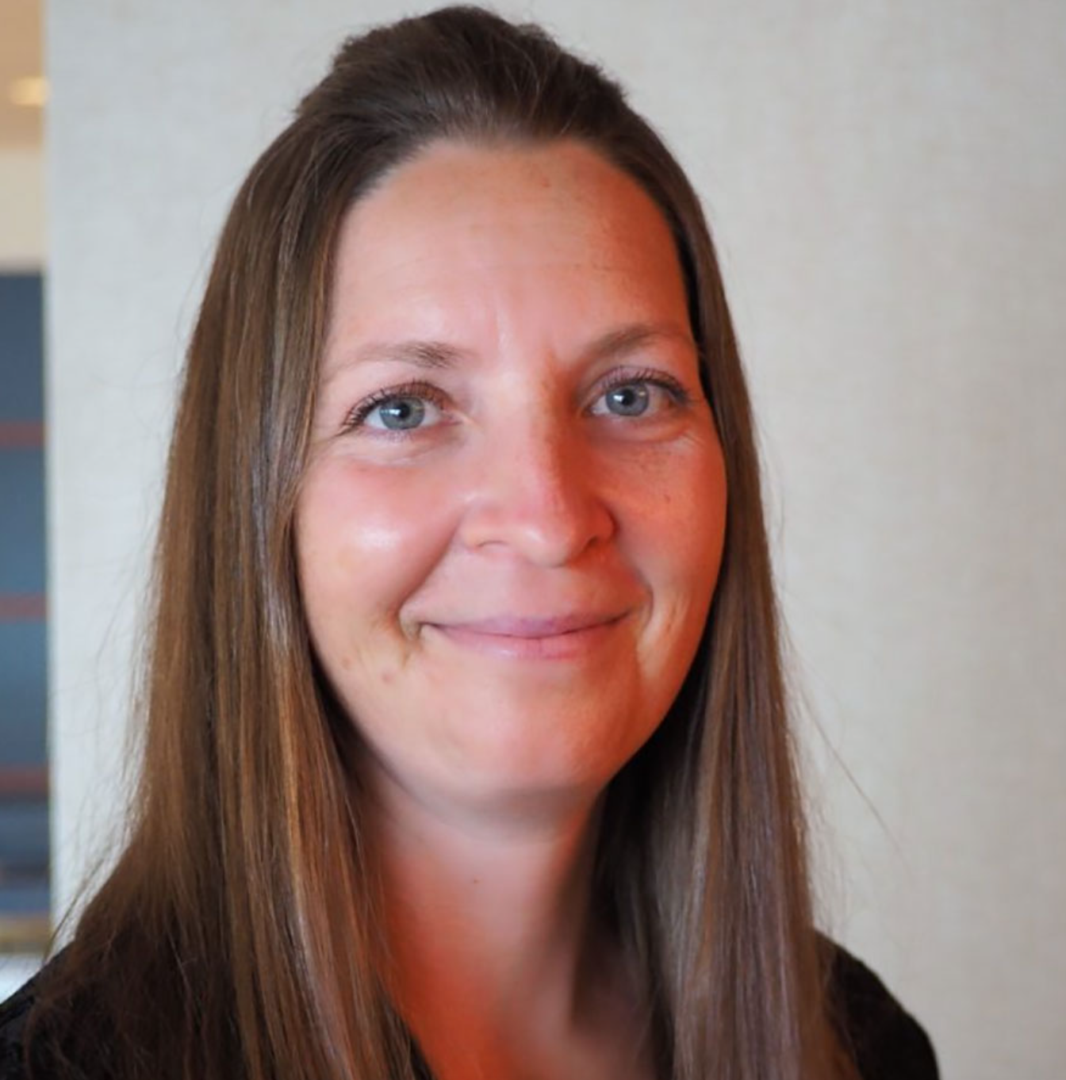
Rebecca McCullough, project manager for WWEST. |Courtesy of WWEST.
Allyship is not about being the loudest in the room; it’s about small actions moving people in the right direction, says Shehroze Saharan, co-founder and managing director of the educational initiative The Matilda Project. The project draws attention to how women’s contributions in the scientific fields have often been minimized and even erased.
“I remember learning about the father of genetics, the father of the atomic bomb, [and] the father of physics,” Saharan points out that, in contrast, women scientists were often overlooked. Rather than replacing existing or male-centered stories, The Matilda Project advocates for equitable representation. “If we’re going to learn about the father of genetics, let’s also learn about [American geneticist] Nettie Stevens and her discovery of sex chromosomes.”
In 1993, American historian Margaret W. Rossiter officially coined this systemic bias the “Matilda Effect.” The name honours 19th century suffragist and abolitionist Matilda Joslyn Gage who first wrote about the phenomenon.
Back-to-school season is an opportunity to reflect on how these gender biases emerge in classrooms across Canada. Organizations like The Matilda Effect and the B.C.-based Westcoast Women in Engineering, Science and Technology (WWEST) serve to highlight these inequities while building more inclusive learning environments.
“Growing up, we are taught, not in a bad way, to be humble, kind and generous with what skills and talents we have,” says Rebecca McCullough, project manager for WWEST. “I [don’t need] recognition for everything that I’ve done, but over time, it’s certainly created some challenges in terms of progression—whether it was professional or personal—when your work was being claimed by others as their own.”
Showcasing untold stories
Saharan co-founded The Matilda Project—a website with biographical entries and other educational resources highlighting overlooked women scientists—with his brother Shehryar Saharan, who also serves as their design lead. Their dream for this “passion project” is to implement these resources in every school board across the country.
“The first time I heard about the Matilda Effect, I actually had no idea what it was called,” Shehroze recalls learning about the gender bias in a high school biology class.
His teacher “was very cognizant” of teaching the full history and encouraging students to recognize how historical records “may not always be accurate.”
An example is the discovery of DNA’s double-helix structure. Shehroze’s textbook cited Maurice Wilkins, James Watson and Francis Crick for this groundbreaking discovery, leaving Rosalind Franklin unacknowledged.
“Unfortunately, her story stands as a very, very strong example of the Matilda Effect in history,” the managing director says. “It was actually her and her student who took a picture of the double helix for the first time.”
Franklin’s story stuck with Shehroze who pursued bio-medical science at the University of Guelph in Ontario. During his last year of undergraduate studies, Shehroze conceptualized The Matilda Project in a digital humanities course.
Their website officially launched in February 2024. According to Shehroze, the site now reaches “thousands of people” per month. It was also recently featured in The Scientist, a magazine for life science professionals.
“You’ll notice that most of the entries are written by different authors and illustrated by different people,” Shehroze adds. “Just like every single scientist is one hundred percent unique and their own individual on our website, we want to make sure the author’s voice is absolutely unique.”
A network of collaborators
Shehroze credits the project’s success to the team’s more than 50 volunteers. These include writers/researchers who are experts in their own fields as well as professional illustrators who can create scientifically accurate images.
Their team keeps a list of future article ideas—stories of women whose contributions have been unacknowledged in the science fields. In the project’s early days, there was around 20 names on the list. That number has grown to over 190 names.
“They face similar struggles over and over again: their husband takes the credit, their lab supervisor takes the credit, they’re overlooked,” Shehroze adds. “A good example is Dr. Chien-Shiung Wu who disproved a law of physics, but her two male colleagues were given the Nobel Prize.”
With contributors from across Canada and around the world—including Ukraine, Italy, Spain, Thailand, Ecuador, India and the U.S.—The Matilda Project recognizes the importance of showcasing diverse voices.
“This is not just a project specific to Canada,” he emphasizes. “That’s also reflected in entries on our website: it’s not just white women who are facing these struggles—it’s also disproportionately affecting women of colour.”
Some women featured, such as mathematician Hypatia of Alexandria, lived hundreds of years ago. Others are contemporary and may even still be alive. According to Shehroze, some living scientists have edited their own entries.
“One of the challenges our authors face is a lack of information about these women online,” he adds. “It’s been really great to see that in the past 20 or so years, more and more historians are uncovering these truths.”
Shehroze believes the initiative benefits all genders. Their video explaining the Matilda Effect calls for better awareness of how women in science have been marginalized. For the team, it’s a responsibility shared by all.
“If you are a cis-gender male working in sciences and you see this happening in your workspace, you see inequity happen, you see that people in your vicinity aren’t getting the recognition they deserve just because of their gender…say something, stand up,” Shehroze says.
Supporting K-12 educators
The process of addressing inequity in science, technology, engineering and mathematics (STEM) is slow—but it’s never too early to start, says McCullough. For her, allyship is a major part of this work.
She recalls how boys “dominated conversations” even as girls were sharing their findings during WWEST’s high school camp. A male colleague pointed out the troubling trend.
“Is that something they even know they are doing? And, if they aren’t aware, is that something us as educators in the K-12 system can help with?” McCullough reflects.
As stated on their website, WWEST is the “operating name” of the Natural Sciences and Engineering Research Council of Canada (NSERC) Chair for Women in Science and Engineering serving the B.C./Yukon region. Jennifer Jakobi, a University of British Columbia Okanagan professor, is the current B.C./Yukon chair.
Under Jakobi’s direction, WWEST offers K-12 curriculum support, academic workshops, youth stem camps, community events and other initiatives supporting inclusion, collaboration and innovation in STEM.
Their free, hands-on curriculum support program collaborates with K-12 educators across B.C., Yukon and the Northwest Territories.
“If we can support teachers in showing them different methods [and] ways of incorporating STEM, not just in sciences but across the K-12 spectrum in all subject areas, that confidence grows across the board,” McCullough says educators who trained as “a generalist” may not be comfortable teaching STEM.
A culinary lesson, for example, can incorporate teachings of the scientific processes involved in meal preparation. The project manager adds that even physical education connects back to scientific principles.
“You [can look] at things like vertical jump or the circulatory system and how that might affect performance,” McCullough adds that activities and assessments are designed to align with the B.C. curriculum. “It won’t matter then which subject or grade level the students are coming from; they will be enthusiastic and excited to be here because their teacher is.”
For more information on The Matilda Project, see https://www.thematildaproject.com/. Interested volunteers are welcomed to contact the project organizers.
For more information on WWEST, see https://wwest-cwse.ca/.


Comments will load once you reach the end of the article.