
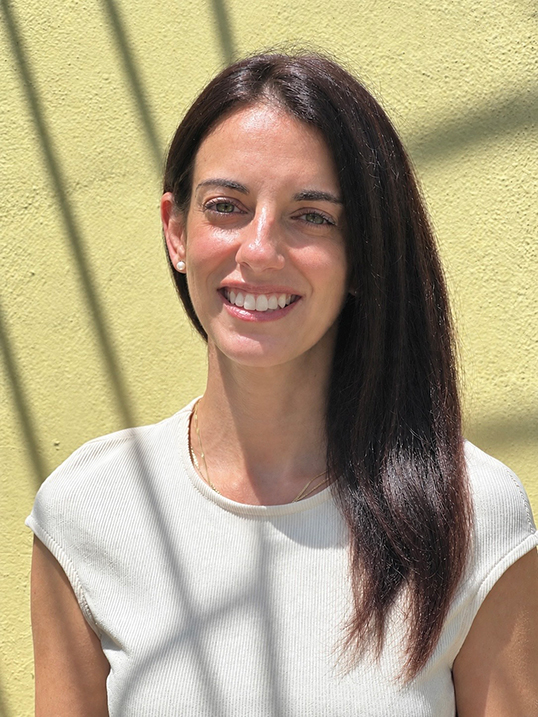
Chantel Acevedo. | Photo by M. Evelina Galang.
“All the characters of the story are bearing witness: they’re telling [Felix’s daughter], ‘This is what he was like,’” Acevedo says these characters include those who loved and admired Felix as well as those who felt betrayed and deeply wounded by him. “As you go through the book, he becomes more and more complex.”
Vancouver Writers Fest returns Oct. 18 to 25 with more than 90 events, including “Chantel Acevedo: Spotlight on Cuba” (Oct. 21, The NEST) which places the author in conversation with fiction and opera libretti writer Maria Reva.
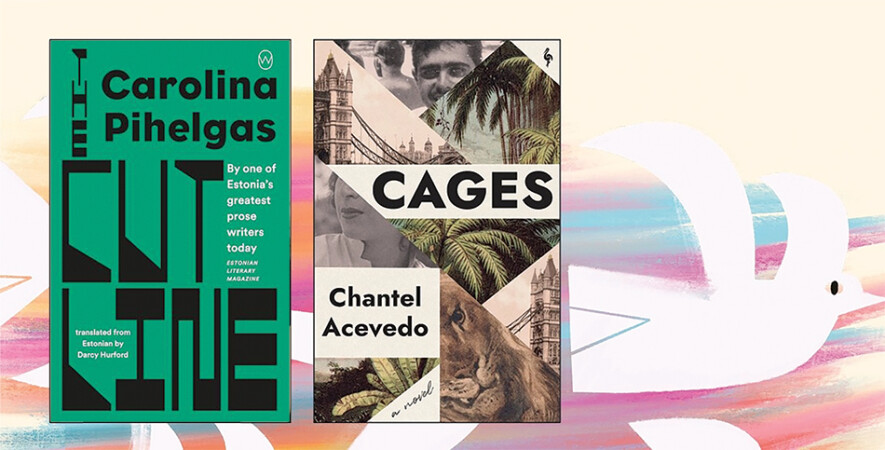
Another event, “Women’s Voices from Europe” (Oct. 25, The NEST), showcases writers Carolina Pihelgas (Estonian), Petra Hůlová (Czech) and Camille de Peretti (French). This panel is moderated by CBC Radio writer/editor/columnist Anna Ling Kaye.
“We really need beauty in this world,” says Pihelgas who sees such beauty in language. Appointed as Tartu’s City Writer Laureate in 2020, the award-winning poet has turned to poetic language to confront difficult subjects. “There is a certain contradiction in it. But there are a lot of bad things happening in the world. We need to talk about them, and it’s important how we do that.”
Snippets of a person
Acevedo worked on Cages for around 10 years, carefully thinking through each strand of the novel. While the book is ultimately a work of fiction, it contains parallels to the author’s life. Her character Felix’s story as a queer, closeted Cuban man mirrors her father’s own story.
“Much like the listener in the story…the daughter who never really gets to know her father, I didn’t get to know my own dad,” says Acevedo. Born in Miami to Cuban parents, the author was raised by her single mother and maternal grandparents following her parents’ separation. She didn’t see her father again until her early 20s – when he was on his deathbed. “Between that moment and when I decided to write Cages, I wrote many books and didn’t touch that story.”
Acevedo didn’t want to write in her father’s voice “without having really heard it.” Yet, her published works during this period featured characters chasing after a missing person – a pattern that illustrates how she had been “writing around” his story.
While a memoir was not practical, Acevedo turned to a story about a zookeeper during the Cuban Missile Crisis. This figure allowed for the exploration of her father’s life via fiction.
“What questions must have driven [my father] in his life and how challenging it must have been to be him in that particular era, in that particular place,” Acevedo says of the inspiration behind Cages. “I have tremendous empathy for Felix and my own father.”
The collage of voices from Felix’s life – his lover in Cuba, wife, another lover, brother-in-law and a daughter who did get to know him – also mirrors Acevedo’s own process of knowing her father.
“That’s what it was like my whole life, hearing little snippets of things,” the author reflects. “It doesn’t quite fully form a person, but it comes close.”
Encouraging empathy
Over the course of Cages’ development, an essential voice emerged. Acevedo had intended on keeping Anabel, Felix’s wife/mother of the listener, silent. The author struggled to understand why this character – who held information about Felix – didn’t openly share with her daughter.
“It dawned on me that silence is very much a choice, and exploring the choice to be silent was the purpose of this character,” Acevedo now sees the character as bringing her closer to Felix’s complexity. “He’s trying to have a real sense of the truth of who he is, and a bit of it is on her back, at the cost of her happiness.”
Cages also explores migration, which Acevedo sees as central to the Cuban American story. The author recalls how in the 1980s, there was a strong sense amongst Cubans in America of being “exiles” rather than “immigrants.” The word “exile,” she adds, suggests a return.
Acevedo shares that the feeling still resonates with many Cubans residing in the U.S. – though it is “most pointed for those who arrived” during the 1960s to late 1990s. For the author, this historical context turns into personal pressure and trauma that sits within characters’ “lives, minds and hearts,” complicating their relationships with others.
“I want people to read it and think, ‘This guy, for lots of reasons – societal reasons, time, his own parents – was never able to be himself fully, and there’s so much tragedy in that,’” Acevedo also hopes Cages sparks curiosity about Cuba and Cuban Americans. “The Felixes in the world are still here, and they deserve our love and support too.”
Becoming oneself again
Estonian poet Pihelgas’s search for a new literary form resulted in her first novel, Vaadates ööd (Watching the Night, 2022). Set in the backdrop of the Soviet regime, the novel digs into her family history, exploring the traumatic experiences carried through three generations of women.
“I’d say poetry is very much present in my fiction as well,” Pihelgas reflects. “Some of the prose I write is quite fragmented, and it feels like the chapters could also be poems.”
Pihelgas’s following novel The Cut Line – exploring a woman’s journey of losing and becoming herself again – is her first to be translated in English. At the novel’s onset, protagonist Liine escapes from her toxic ex-partner, returning to her family cottage in the countryside.
“She’s been in the relationship for so long that she’s disappeared for herself,” Pihelgas shares that Liine’s “healing journey” involves working in the garden. A common feature of Estonian literature, the author adds, is this connection to nature. “The problem…is that [the cottage is] situated right next to a military training area which is being expanded because there’s war in Ukraine.”
Pihelgas sees The Cut Line as exploring internal and external wars: the “war happening inside” Liine – the anxieties stemming from her previous relationship – and the threat of a nearby war reaching Estonia’s borders.
Climate change concerns – which Pihelgas sees as the “reality” of Estonia’s changing environment – also linger in the background.
“I was really amazed and happy that the publisher was interested in publishing the book in English,” she adds the process happened only a few months after the book came out in Estonian. The book has also been translated into German, Finnish and Serbian. “The English translation really opens up a lot of possibilities and doors.”
For more information, see: www.writersfest.bc.ca


Comments will load once you reach the end of the article.