
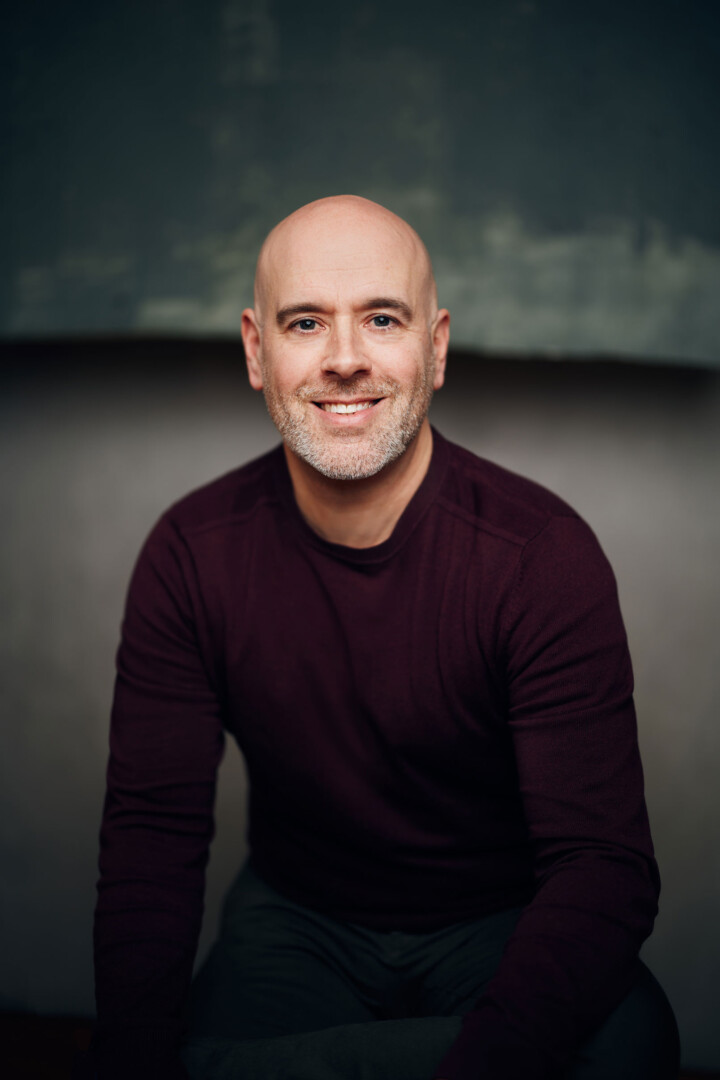
David Leonard | Photo by Calvin Thomas.
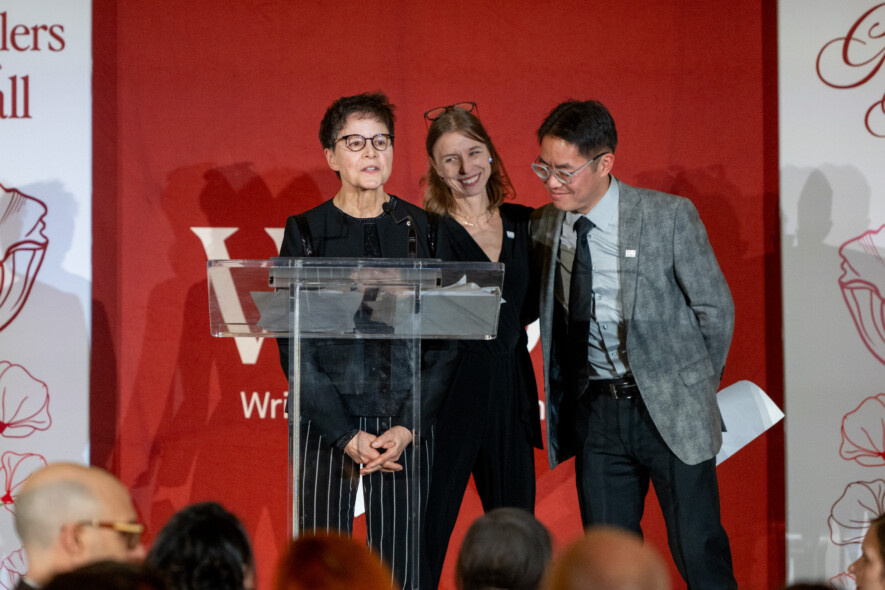
“The book is just the tip of the iceberg for a writer,” says Writers’ Trust of Canada executive director David Leonard who sees the writer’s mind as having endless depth and multiplicity. The Writers’ Trust is celebrating its 50th anniversary with a literary dialogue series—”Conversations in Trust: Canadian Authors Make Sense of Our World”—creating space for writers to publicly participate in civic discourse.
“How do books, reading and empathy help us build a better democracy, citizenry and country?” Leonard shares of the driving question behind the national series. “Our writers and communities tell us, ‘It’s really hard to find common ground these days.’”
In partnership with Vancouver Writers Fest, the series kicks off in Olympic Village’s BMO Theatre Centre on April 16. Moderated by Margaret Gallagher from CBC’s North by Northwest, this first-stop places Kamal Al-Solaylee, Elizabeth Hay and Eden Robinson in conversation.
Community-centred programming
According to Leonard, Vancouver holds a special place for the Writers’ Trust. The opportunity to partner with Leslie Hurtig, artistic director of the Vancouver Writers Fest, was a big draw.
“We want to be coming into town with Vancouver and not at Vancouver,” Leonard reflects, adding Hurtig was one of their first calls.
The community-focused series will also visit Calgary, Winnipeg and Halifax—a reflection of the organization’s national reach over the past five decades.
“Vancouver, Calgary, Winnipeg and Halifax are very literary cities; these are places with excellent art scenes, lots of universities, [and] decent book markets,” Leonard adds. “It gives us a chance to be a little more visible in places where we are less visible.”
All participating writers are winners of Writers’ Trust prizes, be it a literary fellowship or award.
“We’re trying to make sure that we not only giving people someone local that they might expect—but also someone they might not have expect from somewhere else,” says Leonard.
This style of programming, the executive director adds, differs from a traditional festival which focuses on recently published books. For him, this series is less of a “book” and more of an “ideas” event—creating a platform for dialogue centred on what communities want.
A legacy of community
Leonard sees writing as an “act of courage.” Writers, he says, must “stretch themselves” to comprehend the full depth of individuals. This understanding is then applied to portray what he calls the “fullness of a society”—making sense of different perspectives in Canada’s pluralistic communities.
“Writers are critical in this moment where a lot of people are questioning how we can see each other,” he notes the responsibility applies to both fiction and non-fiction writers. “It’s very multifaceted and insidious the way the polarization has snuck into our society.”
This polarization—driven by algorithms—can be felt on either side of the political spectrum. For Leonard, reading is an “act of empathy” allowing people to find connections with others, even those who have widely different lived experiences.
“If you go into a book and think—‘Wait, is that true? Do I really believe that?’ — that question is key to the functioning of society, to be able to always ensure that the thing you are sure about is actually true,” Leonard reflects.
Writers today face many challenges, both old and new. Leonard points to persistent financial difficulties: Authors still struggle to make a living solely off their creations. Artificial intelligence has brought new hurdles.
According to the executive director, Canadian writers also face challenges of visibility: Book markets continue to be dominated by non-Canadian authors, including American writers. Back in 1976, the Writers’ Trust was founded, in part, to draw more attention to Canadian books.
“Here, we are 50 years later, and Canadian books are still not getting enough attention,” Leonard shares that less than 15 percent of books sold in Canada are written by Canadians. “How do we compel Canadians to read more Canadian books?”
In reflecting on their 50th anniversary, Leonard sees a long, continuous line of support with authors helping other authors. The organization is committed to supporting writers in every stage of their career—a point of pride for the executive director.
“Many of the biggest writers you’ve heard of in Canadian history have at some point received help from us,” he adds that the next generation of Canadian writers have now emerged—just as the mid-career writers are shifting to late career status. “Anniversaries are an interesting opportunity: There’s a chance to celebrate the history, to talk about all the great names…but I also think it’s a moment to focus on where we are and where we can go.”
Founded by Margaret Atwood, Pierre Berton, Graeme Gibson, Margaret Laurence and David Young, the Writers’ Trust is the largest non-government funder of Canadian writers.
For more information on the literary dialogue series, see https://www.writerstrust.com/events/anniversary.
For more information on the Writers’ Trust of Canada, see https://www.writerstrust.com/.


Comments will load once you reach the end of the article.