
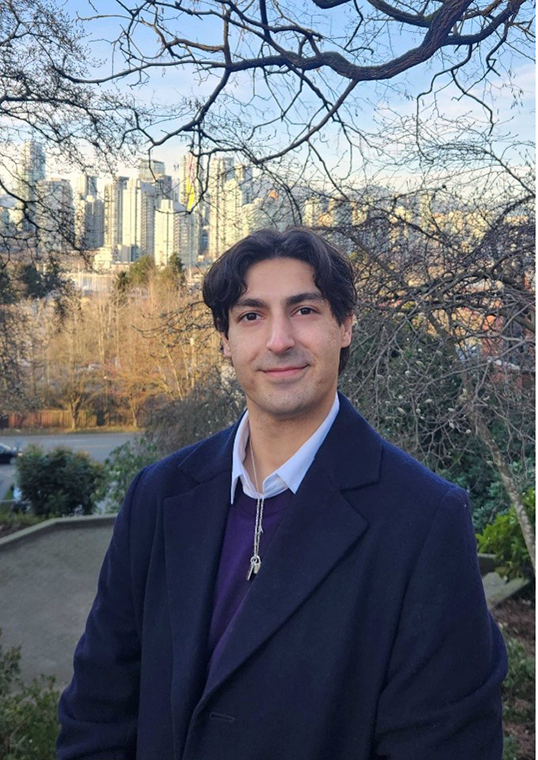
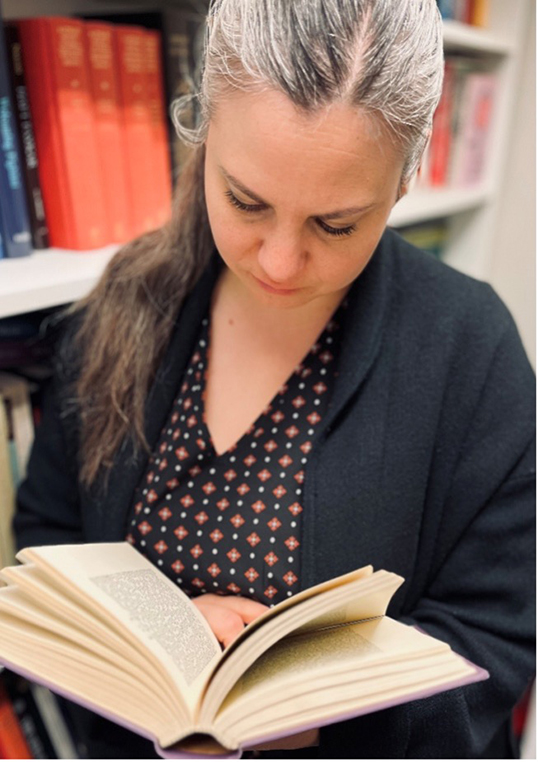
Alexandra Hoffmann, assistant professor of Classical Persian Literature and Culture at UBC, is one of the co-organizers of this event. | Photo courtesy of Alexandra Hoffmann.
“There’s battles with lions, dragons, a supernatural bird and so on – anyone who likes a good adventure will enjoy it,” says co-organizer Alexandra Hoffmann, assistant professor of classical Persian literature and culture at the University of British Columbia.
“We would like the audience to know that it’s not only a set of stories, but a work that inspires moral discussions and many cultural conversations,” adds Doremami.
Led by Hoffmann, the event features a lecture in English and opportunities for discussion. Excerpts of the poem will be recited; Farsi recitations will be accompanied by projected English translations. Celebrated on March 20 this year, Nowruz, meaning “new day” in Farsi, is regarded as the Persian New Year.
An everlasting cultural repository
The event will also include elements of traditional Persian narration, known as Naqqāli. According to Doremami, this narration – an “ancient Persian storytelling art” – sees a skilled performer, a naqqāl, narrating epics via “powerful vocals” and “expressive gestures.” Props are also occasionally used.
“Traditionally performed in coffeehouses, royal courts and public gatherings, naqqāli is a dynamic and interactive form of storytelling that brings history and mythology to life,” he shares. “We believe that the juxtaposition of Naqqāli in Farsi with an English lecture will create a very rich cultural experience.”
“It is a unique opportunity to be immersed in traditional recitation of poetry in Persian, accompanied by a musical instrument,” adds Hoffmann, sharing that tea and sweets will also be provided.
Historically, the story of Shahnameh was performed in coffeehouses by storytellers or naqqāl in Iran. According to Hoffmann, it was once a popular form of entertainment, particularly during the 18th and 19th centuries.
Much like how one might tune into a new episode of a T.V. series, people would attend coffeehouses to “hear how the story continued,” the professor adds.
“Our event is not wholly traditional: it is part academic lecture, part storytelling, but we do have a few students performing the Persian text in the traditional way,” Hoffmann explains. “We’re trying to preserve this unique cultural identity in the modern world.”
Doremami adds that the Shahnmeh is known as the longest epic poem completed by a single author. Ferdowsi wrote it over a 30-year period – recounting myths, legends and Iran’s historical events. The stories span from what Doremami calls the country’s “mythical beginnings” to the end of the Sassanian Empire.
“By providing English commentary and translation with the Persian performers, we tried to foster an environment where everyone can follow along – while still respecting the original way that the Shahnameh is traditionally enjoyed,” Doremami adds.
In the Persian Book of Kings, Esfandiyar needs to overcome trials – perilous tasks requiring strength, skill and creative thinking. The hero endures adverse conditions and perseveres, making the story of the Seven Trials an inspiring one for Persian communities worldwide.
“The Shahnameh, completed in 1010 CE, is one of the most important cultural repositories for Persian speakers or those with Persian heritage,” Hoffmann says. “The stories are more than 1000 years old, and they have permeated Persian literature, poetry and everyday life for centuries.”
A human connection
For Doremami, Nowruz is the “perfect” occasion to share stories. He adds that this new year celebration – based on the spring equinox – says goodbye to dark winter months while welcoming a promising spring.
Marking the arrival of brighter days, Nowruz invites families to reflect on what they want to leave behind and their hopes for the upcoming year, adds Doremami. He recalls family gatherings – featuring large dinners – with grandparents, uncles, aunts and older cousins.
“Older family members recount their youth to the new generation, often resulting in humorous, embellished stories with many life lessons beneath the surface,” Doremami shares. “For the many young Iranians living away from home, this also results in past stories of their homeland, accompanied by hopes of peace, returning and reconnecting to their roots.”
While Esfandiyar’s story is not directly connected to Nowruz, the organizers see the new year celebration as an opportunity to build community and have people engage in Persian literary culture.
“Many people draw their own ethical lessons from the stories of past kings and warriors – who are almost always fallible, complicated characters,” shares Hoffmann. “There is always something fundamentally human that we can connect to.”
“Whether you are a veteran of Persian culture, a member of the new generation who may not fully speak the language, or are just now learning about this ancient culture, we hope that you will feel at home,” concludes Doremami.
For more information, see https://vpl.bibliocommons.com/events/69962cd48d5e2d0933600125.


Comments will load once you reach the end of the article.