
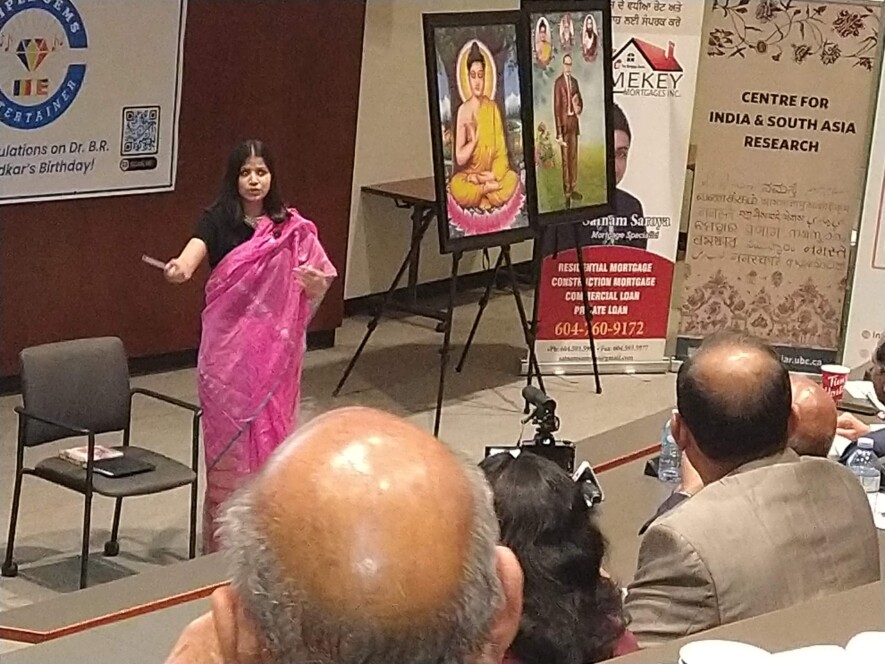
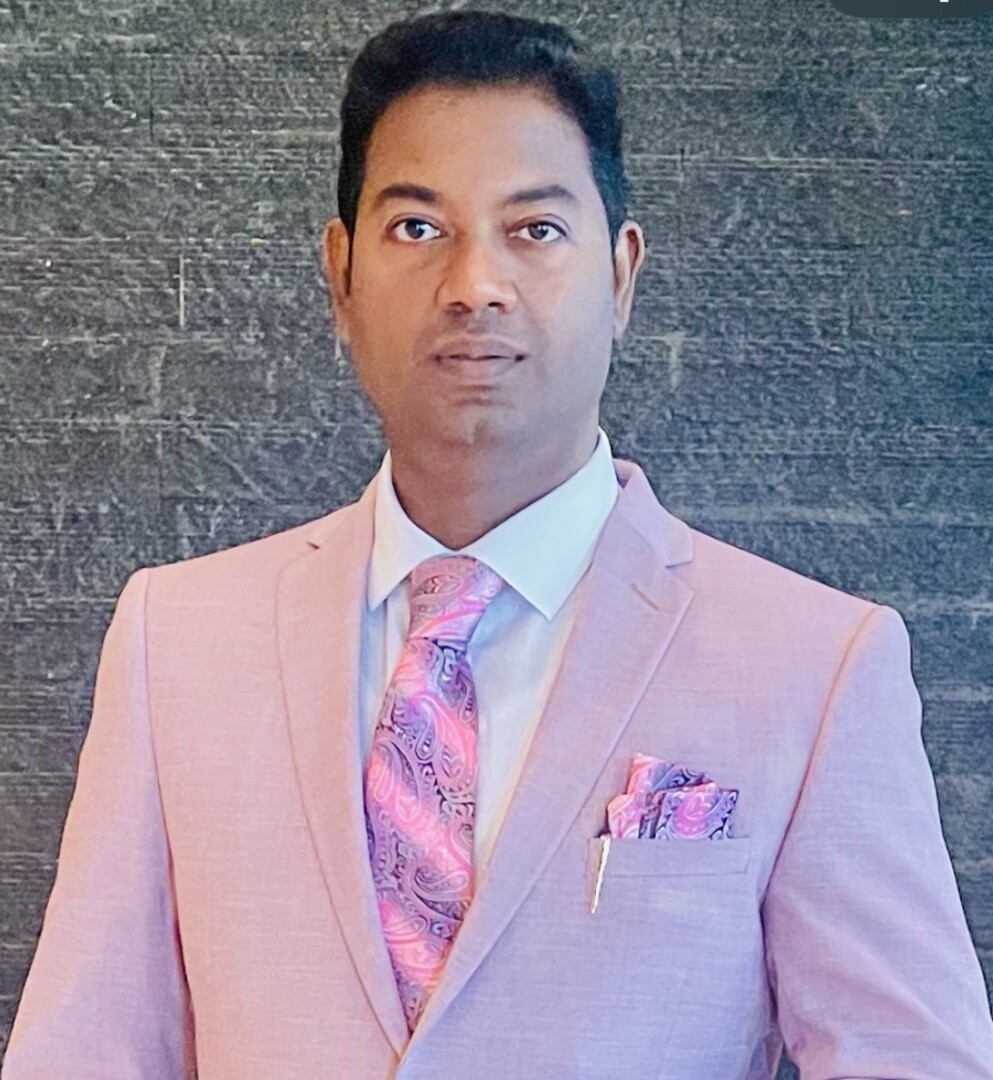
Rajratna Ambedkar, panelist at this year’s Dr. Ambedkar Symposium. | Courtesy of Raj Ratan️ Ambedkar.
The Chetna Association of Canada’s (Chetna) Dr. Ambedkar Symposium on Emancipation to Fight Caste-Based Discrimination in Canada and Beyond returns March 15 and 16. Named after Bhimrao Ramji Ambedkar—Indian jurist, politician and social reformer known for his commitment to democratic equality—the conference gathers the academic community, along with the public, to discuss caste-related discrimination within and beyond Canada’s borders.
“In the year 1923, he wrote The Problem of the Rupee,” says panelist Rajratna Ambedkar of the statesman’s contributions to the Indian economy. “But, we still don’t have any representation in the banking system.”
Rajratna, who is Bhimrao Ramji Ambedkar’s great grandnephew, will contribute to the panel on Economic Emancipation (March 15, Simon Fraser University’s Harbour Centre). The panel will also feature Chanchal Mal, Chetna advisor; Vimal Pandey, Simon Fraser University visiting scholar; and Harmesh Chander, Chetna past vice-president.
Achieving economic equality
While India’s Constitution outlawed caste-based discrimination, Rajratna says such forms of discrimination still exist. One barrier, he notes, exists in the funding of education, particularly those that lead to professional careers like medicine, law and engineering.
“The Dalits don’t have collateral because for the past hundred years, we were not allowed to have land, property or gold,” Rajratna says, adding many students from this background are denied loans from the State Bank of India because they don’t have enough collateral. “This is the first generation to have collected gold—we don’t have inherited gold; we don’t have inherited lands.”
Their other option, Rajratna says, is to seek employment in the public sector, where hiring quotas exist. However, he notes that these opportunities are becoming scarce as well—with more government jobs turning into contract-based positions.
Financial literacy—including knowing how to invest and create long-term wealth—is also a challenge, Rajratna adds. Equality, for him, isn’t just about gaining political rights: it also concerns full management and control over one’s finances.
Practical approaches
Rajratna founded the Dr Bhimrao Ambedkar Multistate Cooperative Credit Society to address these gaps.
“My vision is that we have to create the first Ambedkarite Cooperative Bank in India,” he shares. “We have the resources with us, [but] we don’t have the financial management of those resources.”
Rajratna is referring to a news report on how the cancellation of Ambedkar’s birthday celebration in 2020—during nationwide Covid-19 lockdowns—saved plenty of money.
“We’re spending that money on celebrations, but we don’t have our own institutions,” Rajratna adds. “Rather, we are building his statues all over the nation.”
He sees the Ambedkarite Cooperative Bank as the first step to establishing institutions that carry out Ambedkar’s ideologies. Under Rajratna’s vision, a cooperative bank is jointly owned by its shareholders—what he calls “the society” rather than just one or two members.
“And collectively, the society will grow,” he shares, adding this isn’t the first instance of a cooperative bank in India.
Other groups, such as Christians, already have their own cooperative banking systems, he says. Rajratna would like to see followers of Ambedkar—both within and outside of India—practice the late statesman’s ideology.
By visiting Vancouver, he hopes to find global support for their fight against caste discrimination in India.
This year’s conference will also feature panels on political emancipation (March 15), caste and gender (March 15), India’s Buddhist heritage (March 15), and adding caste as a protected category (March 16). The lectures/discussions of the first day are held at Simon Fraser University’s Harbour Centre; the second day will be held at University of British Columbia’s Robson Square.
The symposium will conclude with a film screening of Ava DuVernay’s Origin—a 2023 film portraying American journalist Isabel Wilkerson’s research into caste systems around the world—at the Cinematheque.
For more information on this year’s Chetna Association of Canada’s symposium, including the full programming, see https://www.chetna.ca/.


Comments will load once you reach the end of the article.