
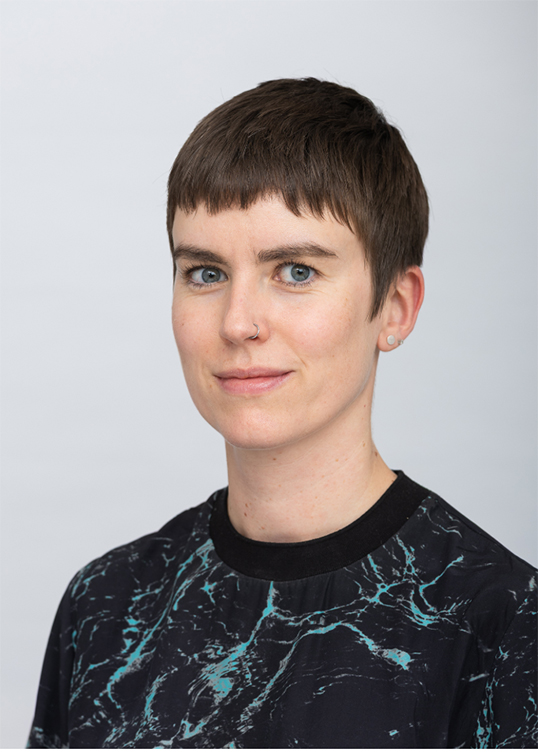
“The idea of ecocide is to capture something that, in its severity, is as extreme as other things we might think of as international crimes, like genocide or crimes against humanity,” Killean shares. “I want to look closer at what the campaign seeks to achieve and pose some questions as to whether it can achieve those goals.”
The conversation will also explore limitations of international law and consider other mechanisms of accountability – as related to environmental harm. A reception in Graham House will follow the talk.
Identifying the issues
According to Killean, identifying the best forum – be it the International Criminal Court (ICC), an environmental court, a domestic court – is a key question. Part of this investigation considers the interplay between domestic and international legal realms.
“Should Canada have its own crime of ecocide, or does that duplicate existing environmental crimes? Should it be something on the international level?” she asks. “How do you capture the severity [of ecocide]?”
In Killean’s current residence of New South Wales, there exists a Land and Environment Court – a specialist superior court that hears cases regarding the environment and other land development-related disputes. Some activists argue that an international environmental court should exist.
Killean points out that a lot of environmental crimes take place legally with correct permits and licencing. This poses another challenge for criminalizing ecocide – one where perpetrators may not be aware they are doing something illegal.
“People need to know what a crime is so they can avoid perpetrating that crime,” she says. “How do you get the balance right between capturing the harm and recognizing that question of certainty?”
Another question, for Killean, has to do with measuring the severity of ecocide. In particular, she points out that environmental harm may be justified with language that identifies other needs.
“The tar sands in Canada is a classic ecocide example that might be justified in the language of ‘Well, there’s an energy need there that has to be filled,’” she explains. “So, how do you balance those competing interests?”
To criminalize ecocide, one must also decide just who should be prosecuted. According to Killean, international crime has traditionally been about prosecuting individuals. Yet, ecocide is often committed by corporations – which are considered “legal persons,” but not “natural persons.”
“Who is being put on trial? Is that a worker?” she asks, while identifying fairness concerns with putting individual workers on trial. “Is that a CEO? But they might not know what’s going on in their corporation. Should they know? How do you find that liability framework?”
Determining causation
While ecocide isn’t currently listed as an international crime under the ICC, the lecturer says calls for its inclusion are growing.
“In the 20th and 21st century, you see the concern about climate change grow,” she says. “We also can see after a few decades that existing environmental law doesn’t seem to have curtailed harm – it just seems to enable harm or put legal parameters around harm.”
According to Killean, this frustration with the current legal framework has inspired activists to consider ecocide from a criminal perspective. One realm where ecocide could be tried on an international level is in the ICC.
“There are certainly [limitations] of what criminalization at the ICC can achieve,” she says, citing resource limitations. “It’s meant to be a court of last resort: If you’re prosecuting your own nationals, the ICC won’t intervene.”
Located in The Hague, the ICC is a treaty-based court – it only has jurisdiction over countries who have signed on. Unlike the UN’s Court of Justice, the ICC puts individuals, not states, on trial. War criminals, for example, may be put on trial in this forum.
According to Killean, the ICC’s reliance on state cooperation is another limitation. International crimes are also difficult to prove because of their complex nature. Killean says this complexity may involve dealing with “subsidiaries of subsidiaries of subsidiaries of corporations” in the context of environmental crimes.
“A lot of environmental harm is slow to reveal itself; it takes place over years,” Killean says, adding the work of gathering evidence requires a well-qualified team of interdisciplinary experts. “Determining causation, finding attribution – who caused this harm – is very difficult.”
For more information on the upcoming talk, see https://greencollege.ubc.ca/events/should-destroying-planet-be-crime


Comments will load once you reach the end of the article.