
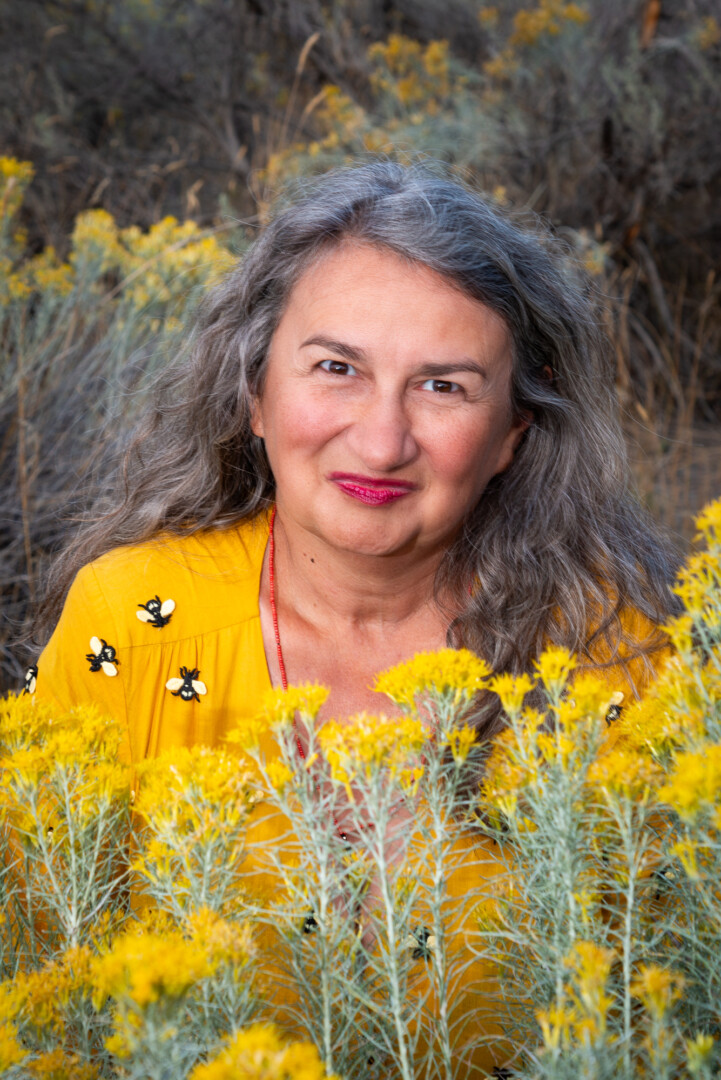
Lori Weidenhammer | Photo by Darren Kirby.
Knowing what is in your backyard not only helps bees—it is also empowering and fun, says artist and educator Lori Weidenhammer. She will host a Vancouver Public Library event, May 12 at the Dunbar Branch, “The Power of Citizen Science to Help B.C. Native Bees.”
“People are really worried about honeybees, but it’s the native bees in B.C. that we’re really worried about,” she shares—adding honeybees can be moved around, whereas native bees’ nesting sites (in trees or grounds) are more vulnerable. “Native bees are the bees we really need to study and save.”
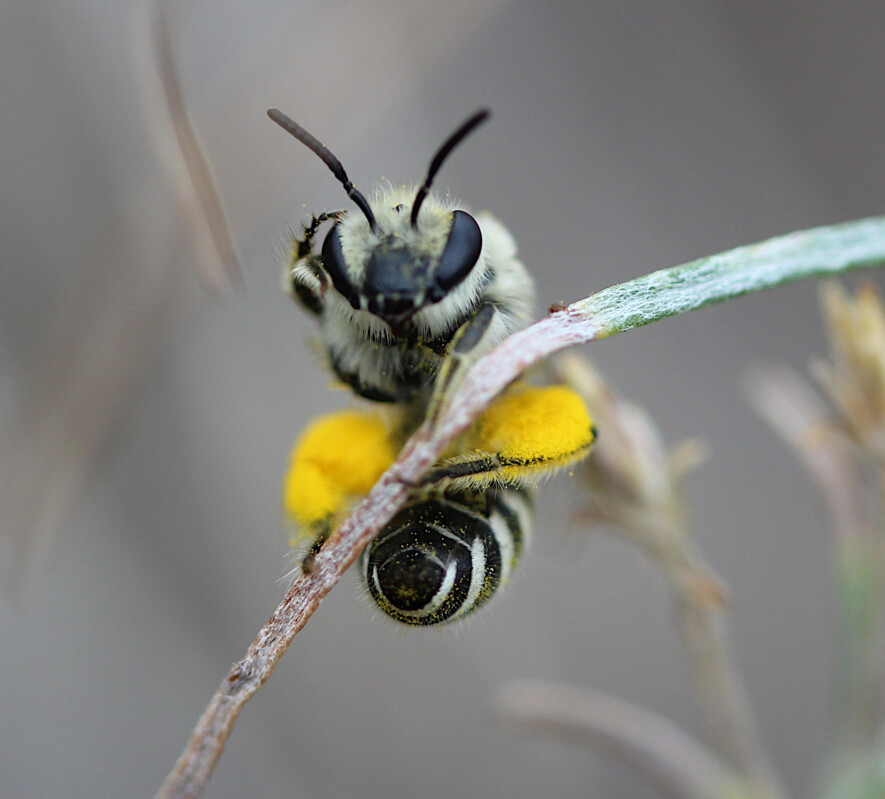
Weidenhammer is the co-creator (with Tyler Kelly) and co-curator (with Lincoln Best) of iNaturalist’s B.C. Bee Tracker project. The project welcomes public submission of bee photos (and their surrounding plants). The team, at times working with master melittologists, will then identify the pollinator—leading to much-needed data on the province’s bee population.
Gardening for pollinators
Weidenhammer is the author of Victory Gardens for Bees: A DIY Guide to Saving the Bees, which provides guidance on supporting wild pollinators. A revised edition—including updated planting charts, community projects descriptions and online resources—was released last year.
“70 percent of bees species actually nest in the ground, so [being] aware of that might actually change the way you garden,” she adds. “One of the things we tell people is not to over-mulch.”
Mulching is when gardeners add a protective material on the soil’s surface. Weidenhammer recommends using leaves instead of woodchips when mulching. She also advocates for growing plants close to the ground, allowing bees to nest under them.
“One of those [plants] is Kinnikinnick,” Weidenhammer adds. “I see lots of observations [from the bee tracker project] with bees on Kinnikinnick all over B.C.—it’s a really important plant at this time of the year.”
According to Weidenhammer, another good practice is to plant at least one square meter of the same type of flower. This allows bees to forage on “autopilot” because they don’t have to switch between plant types.
The gateway bee
Weidenhammer’s father was a hobbyist beekeeper. After moving to Vancouver, she started volunteering with the University of British Columbia Farm, reconnecting with honeybees.
“I met some people who talked to me about the other bees—like bumble bees, mason bees and native bees—and I really went down this rabbit hole,” she shares. “They call honeybees the ‘gateway bee.’”
There are over 20 thousand species of bees in the world. B.C. is home to many of them.
“There’s an old tradition in the honeybee culture of telling the bees,” she shares of the inspiration behind her persona, Madame Beespeaker. “If there was a wedding, birth or death, it was someone’s job to go tell the bees.”
As Madame Beespeaker, Weidenhammer has been collecting messages for the bees. At a previous women’s group event, she used this persona to advocate for talking to each other—sharing concerns, feelings and grief over climate change—turning everyone into bee speakers.
“Access to nature should not be elitist,” Weidenhammer draws attention to the importance of getting kids involved in nature. “The more people can feel connected to science, the more they will understand how important it is in our lives…If you become a citizen scientist, you’d understand how important it is and how much work goes into it.”
The UN recognizes May 20 as World Bee Day. The day commemorates the pioneer of beekeeping Anton Janša’s birth in 1734—celebrating bees’ essential role in ecosystems around the world.
For more information on Lori Weidenhammer, see https://loriweidenhammer.ca/.
For more information on the Vancouver Public Library event, see https://vpl.bibliocommons.com/events/69b1dc0ab0595799c0a27766.


Comments will load once you reach the end of the article.