

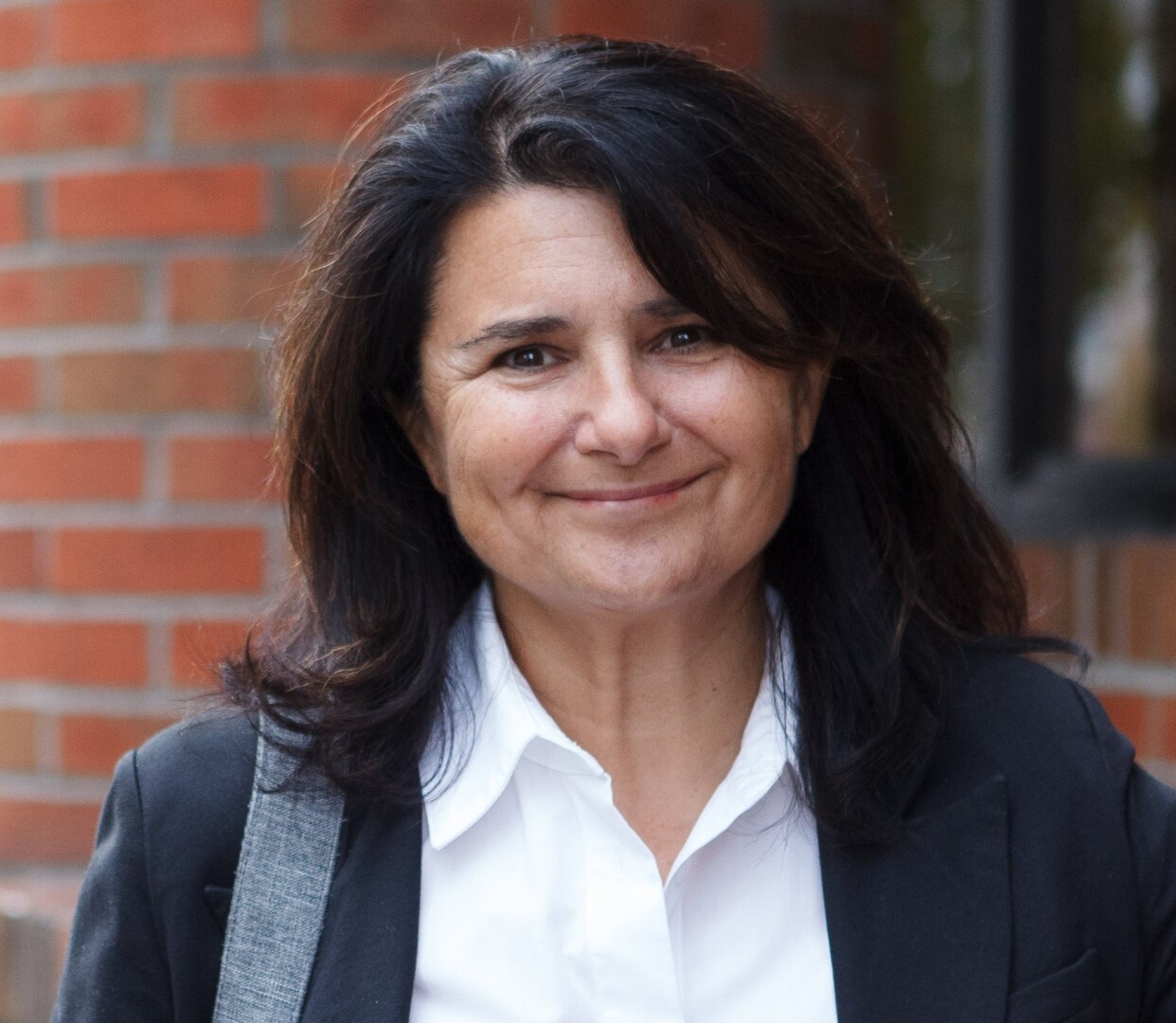
Nancy Clark | Photo by Geoff Howe.
What happens to newcomers during their resettlement in Canada is one of the most important factors determining their mental health, says Nancy Clark, associate professor at the University of Victoria’s (UVic) School of Nursing. Clark was one of UVic’s delegates to Science Meets Parliament, an initiative of the Canadian Science Policy Centre.
Held at the B.C. Legislature last month, the event encourages dialogue between researchers and politicians—an experience Clark describes as “a conduit” between the two parties. Over two days, the delegates dialogued with policymakers, including members of the legislative assembly and ministers. In addition, the initiative presented an opportunity to connect with other scientists.
“Science Meets Parliament is not a one point in time thing: it’s an ongoing collaboration, relationship-building, an entry to policy and government,” she says.
A balancing act
Clark says the workshops on crafting effective, high-level research pitches were particularly useful, noting that the best pitches not only need to explain research but also point out its impact and should align with government priorities.
Another highlight was learning how to ask government officials questions.
“It’s very different than what you might see during a question period in legislature,” says Clark. During legislature assemblies, the government is put in the hotseat, having to respond to the opposition. “When you’re engaging with bureaucrats, you first have to hear their side of the story: Why are they thinking that way?”
Clark points out that everyone—political parties and scientists—share the goal of improving B.C. residents’ wellbeing. The dialogue then is about aligning priorities, while looking at all sides of the problem.
“For example, climate change right now is top of mind, and climate is really connected to our mental health, so how do we balance deforestation and mining at the expense of climate and people’s health when we also have to increase the economy and people’s wellbeing and income?” she asks.
Clark also found the event helpful for understanding the government’s priorities.
“I gave a story about how refugees arrive safely in Canada, and while they are resilient, there’s a lot of factors that determine their mental health,” she shares.
Those factors include housing, income and access to healthcare as well as other resources, challenges that Clark contextualized within the broader Canadian society.
Serving communities
One in five Canadians, she says, experiences a mental health problem or condition. According to Clark, less than half of these people report receiving “adequate support and care” within the healthcare system.
“If my research aims to address the most marginalized, then it can also have an impact for other communities,” Clark says of her ‘integrated care’ approach. “If we improve access through things like cross cultural health brokers (CCHBs) and health navigators, we address those social determinants of health and cut costs, like emergency care visits, and ultimately, improve the care and wellbeing of newcomers.”
Cross cultural health brokers are bilingual and bicultural, supporting patients with access to culturally appropriate medical and social services.
“Many people that have forced migration backgrounds experience a lot of barriers, for example, knowing where to go for healthcare services,” Clark adds that access to gender-sensitive care is another challenge.
Over the years, Clark has also collaborated with many settlement organizations in B.C. She has worked with Syrian, Afghani and other refugees; she involves these community members as peer researchers.
Clark hopes to see more primary care physicians and nurse practitioners in local communities, along with more “sustained funding” for community healthcare centres. She also advocates for more education around equity, diversity and inclusion in professional schools.
“When we talk about newcomer communities, specifically refugees, their priority is to rebuild their lives,” she points out that the focus is often on supporting their children’s education. “Often, seniors and elders are …left behind, because they have even less language ability and resources—there’s a need to look at intergenerational care.”
For more information on Nancy Clark, see https://www.uvic.ca/health/nursing/about/faculty-and-staff/faculty/clark-nancy.php.
For more information on Science Meets Parliament, see https://sciencepolicy.ca/programs/science-meets-parliament/.


Comments will load once you reach the end of the article.