
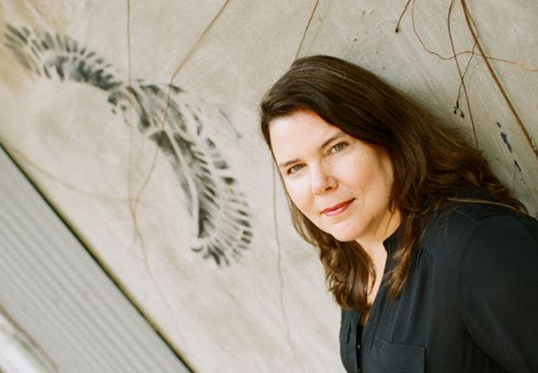
Caroline Dingle.
“It’s not just the loss of species; it’s the impact on how the whole ecosystem functions,” Dingle says. “So far, in the last 500 years, there’s around a little bit less than a thousand species that have already gone extinct.”
An evolutionary biologist, Dingle has worked in biodiversity conservation for over two decades. She will share insights at the CapU talk, “Are We Causing the Sixth Mass Extinction Event?” on Feb. 25 at the Squamish Public Library.
Defining extinction
Dingle notes that extinction itself is not unusual in Earth’s history. In fact, animal species may go extinct regardless of human presence. An example is the Cretaceous-Paleogene extinction event – which led to the end of dinosaurs – approximately 66 million years ago.
She adds that scientists have differing views on whether a mass extinction event is underway. The debate is highly technical, focusing on the definition of mass extinction.
“I think that debate is probably not so important, what scientists do pretty unanimously agree about is that we are causing a lot of extinctions,” Dingle says. “Our current extinction rate is now increasing above the normal rates and maybe headed towards one of these mass extinction events.”
For Dingle, the effects go beyond loss of species. The necessities that support human life – such as food and oxygen – are also being threatened.
“A significant amount of our agricultural crops are pollinated by insects,” the biologist says.
There is also what Dingle calls an “aesthetic argument” for protecting the environment – one that recognizes how people enjoy being in biodiverse areas. According to Dingle, this is more than just aesthetics: studies have shown that being in such environments can improve mental health.
“It’s possible that losing one or two species won’t cause any harm, but we don’t know enough to know what the impacts of that are,” she shares. “A conservative approach is to prevent as much species loss as possible, so that we maintain all these processes we depend on.”
Local impacts
B.C. has the highest biodiversity of any province in Canada – and one of the highest proportions of species at risk, says Dingle.
“Anywhere up to 2000 species are threatened right now, just in B.C. alone,” she says. “Somewhere around 300 are endangered.”
A major driver of this trend is habitat loss, particularly from urbanism. As an example, Dingle points to the great blue heron’s loss of their nesting habitat.
She adds that the economic costs of losing such biodiversity is difficult to assess. This is because most of nature’s benefits are free.
“There’s no money attached to pollinating our crops, for example,” she adds. “It’s hard to put an economic value on that, but people are attempting to because people understand money, and that’s a good way to start thinking about it.”
To calculate economic impact, Dingle describes biodiversity as a form of “natural capital.”
“If we lost all the honeybees, for example, you’d have to replace it with people pollinating all those plants, which is obviously time consuming and expensive and probably not as effective.”
Dingle believes individuals can take action by rethinking how small, green spaces – including yards – are used. Rather than keeping a monocultural lawn, they can consider diversifying these spaces with native flowers.
“Without [science], we don’t know what’s happening, but it’s not enough by itself,” she adds. “It really will take collaboration from the individual to the government, but also across a lot of different fields,”
For Dingle, curiosity is key to thinking about biodiversity preservation. The continued presence of wildlife in urban areas shows what is still possible.
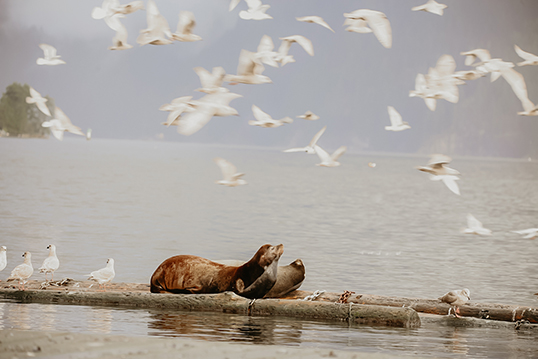
“You think about all the urbanization and all the industry along the inlet, and we still have these big animals,” she says of Deep Cove’s sea lions and seals. “Once you know what’s there, you get more excited about protecting it.”
Part of the 2025 Capilano Universe Speaker Series, this free event will also be available virtually.


Comments will load once you reach the end of the article.