
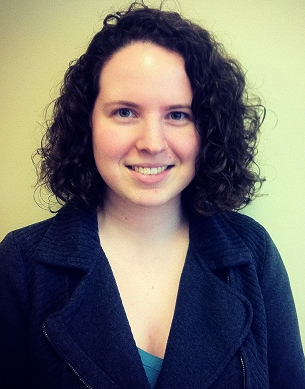
Alex Hughes | Courtesy of Canadian Parents for French.
Learning an additional language provides an opening to the world—it builds an understanding of who the ‘other’ is, says Alex Hughes, president of the B.C. and Yukon branch of Canadian Parents for French (CPF). Hughes adds that over time, the CPF has seen a shift in families accessing their services—one that reflects the diversity of the province.
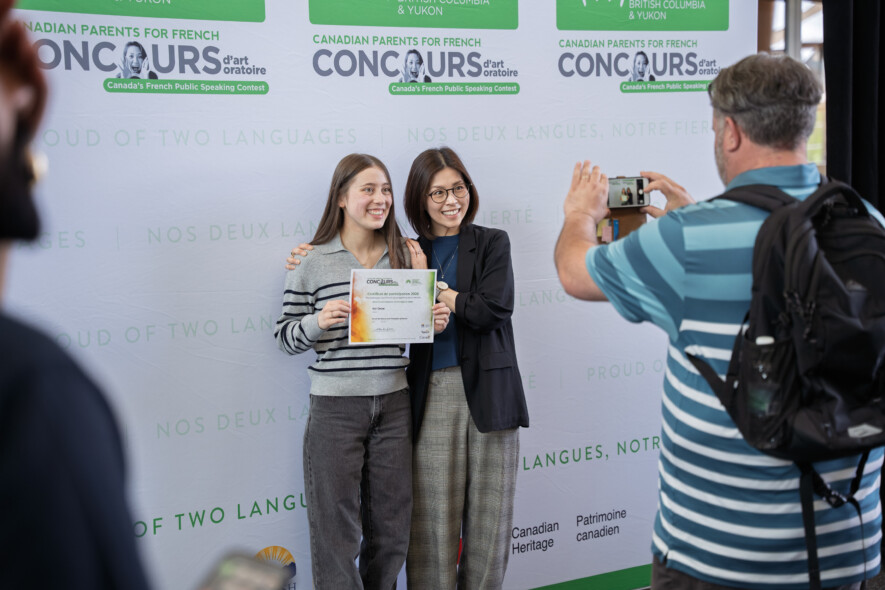
“What we’re seeing now is French as your additional language, so French as your second official language,” Hughes recalls how, during the ‘90s, Concours d’art oratoire—CPF’s annual public speaking competition—presented a more “homogenous view” of participants. “You’ve [now] got parents and grandparents and [other] family members coming [and] watching students; some of them never dreamed that their child or grandchild would speak French.”
Many CPF families now speak a non-official language of Canada (such as Cantonese or Punjabi); acquire English from living in an Anglophone environment; then attend school to learn French. CPF supports all families seeking French second and additional language education across Canada.
An inclusive environment
For Hughes, one of CPF’s strengths is their “evidence-driven” approach to advocating for policy changes, including more funding, at the provincial and federal level. The organization has funded research on language learning and the state of French language programs in Canada.
Part of this research recognizes linguistic insecurity—feelings of anxiety that one’s language use is not ‘proper’ or ‘accurate’—as a barrier to learning French.
“We really wanted to say, ‘That’s not true,’ and support the Francophone communities, but also support the recognition that Francophiles—people who learn French not as their first language—are also valid,” she says. “They’ve made that effort, their French is real French, their accent is more than acceptable, it’s proper. We all add to what it looks like and sounds like to be French in Canada.”
Hughes adds that CPF events, like Concours d’art oratoire, do not evaluate students’ accents. The organization also brings in French-speaking entertainers, workshop leaders and motivational speakers with different accents—providing students opportunity to hear French’s diversity.
“They come and share with students where they are from, what their cultural differences are …how that affect and tie into how they sound, how they speak, the words that they use,” Hughes says these events have included African drumming and east coast storytelling. “[Students] realize, ‘I don’t sound like him, but he doesn’t sound like my teacher, and we’re all okay and supported in this.’”
Building confidence
Hughes grew up in an Anglophone household; neither of her parents spoke French. They sought French immersion on a “hope and dream” that she would pick up the language—an experience common amongst French immersion students.
“By the end of elementary school, I understood that I was able to do things that my parents couldn’t,” she recalls being able to watch French television shows and go on exchange to Quebec. “I was coming home with all these stories about this family in Quebec, and it was new to my parents too.”
Hughes’ French fluency has also been essential for her academic and professional success. She studied law in a bilingual environment at McGill University; her French knowledge helped secure a legal counsel role in Canada’s Department of Justice—despite the office being in Vancouver.
“I’ve lived [and studied] in France for a year, and I wouldn’t have had that opportunity to have that kind of cultural immersion if I didn’t already have the language skills that I learned in B.C.,” she says. “There’s a certain level of personal achievement and confidence that comes with learning any skill, and language is a big one.”
Hughes adds that parents who don’t speak French are well-supported in the French immersion system. Teachers are trained to not only help students but also emphasize “how to learn.”
“It’s structured differently in terms of pedagogy,” she explains. “There’s a focus on ‘here’s how you have to problem solve the learning.’ You’ve got to learn how to learn rather than just learn the content.”
Hughes sees French immersion as providing opportunities to learn soft skills—including public speaking—in a supportive environment. One may conjugate verbs wrong, forget vocabulary or think their accent isn’t “textbook.” For Hughes, these experiences—which are common to all language learners—build confidence in the student.
“You learn that there is diversity, and there is interest and strength in that diversity,” she says. “My accent is not going to be the same as somebody else’s accent, but we can still get up and say what we’re going to say.”
Life-long learning
A major barrier to accessing French immersion is the availability of these programs, says Hughes of long waitlists in certain school districts. Teacher and classroom shortages, for example, can impact waitlists.
“Some [districts] have scaled back because it can be a more expensive program to run,” Hughes adds that French resources are more expensive than their English counterparts. Districts must also ensure the program’s continuance for multiple years, so families don’t have to move their children between schools. “French immersion has sometimes been seen as this ‘extra option,’ and so…they can feel not so bad about cutting funding and programs, but it is a really big loss for those communities.”
Aside from Concours d’art oratoire, CPF also hosts Dites-le en vidéo—welcoming students across the country to film themselves explaining a topic of their choice. Entries are then evaluated by judges throughout Canada.
“It’s still using those research, language and speaking skills, but in a more tech-friendly way,” Hughes adds CPF chapters also host movie screenings, theatre days, skating nights and other French programming
She is looking forward to creating rich linguistic and cultural programs throughout the upcoming school year.
“Those two things are so linked and intertwined: you can’t learn language without culture, and you can’t learn culture without language,” she says. “If they’ve got strong experiences when they’re in school, they’re more likely to become Francophiles for life and continue [using the language] even past when they’re forced to do grammar sheets.”
For more information, see https://cpf.ca/.


Comments will load once you reach the end of the article.