
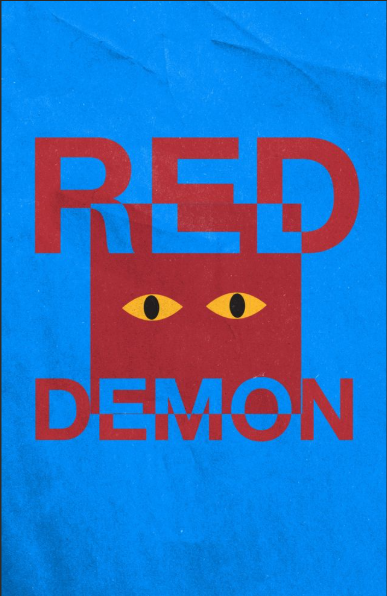
The play follows a mysterious stranger who washes up on the shore of an isolated fishing village and is regarded with fear due to his strange appearance and inability to speak the villagers’ language. The version of the play shows the stranger, the eponymous Red Demon, speaking a language that resembles Spanish while the rest of the village speaks Japanese.
“Language is especially important,” said play director Mayumi Yoshida, “because it becomes both a literal and metaphorical barrier. When you can’t understand someone’s words, it’s very easy to fill that gap with assumptions, fear or prejudice.”
Lost in translation
For Yoshida, the connection to the source material was immediate and personal.
“My own life has been built around navigating different cultures and languages,” said Yoshida. “Before moving to Vancouver, I grew up between the United States, Japan, and Belgium. I always felt like I had one foot in Western culture and one foot in Japanese culture. For a long time, I felt rootless – like I didn’t completely belong anywhere.”
It was this “sense of duality” that Yoshida said was part of approaching the play as part of Gokko Creative. The collaboration with rice & beans – “a natural partnership” due to the company’s “strong history” of multilingual storytelling in Vancouver – proved to be beneficial in wrestling with what Yoshida called “very complicated questions of language and translation”
“Noda is a very unique playwright who uses wordplay, sound, rhythm and culturally specific humour in really inventive ways,” said Yoshida. “You have to find a way to preserve the spirit and theatricality of the original while making it meaningful for a Vancouver audience.”
It was this desire that led to the introduction of Spanish dialogue for the Demon, as well as English surtitles which also required localization for a Canadian audience.
“In a way, that challenge mirrors the play itself,” said Yoshida. “We’re constantly negotiating between languages and cultures, trying to find connection despite the things that separate us. I want the audience to experience some of that disorientation themselves – to understand, even briefly, what it feels like to be the person who doesn’t understand the language or the rules of the world around them.”
Seeing ourselves in the stranger
Yoshida hopes this disorientation for English-speaking audiences – in addition to creating an opportunity for Japanese- and Spanish-speaking audiences to see themselves reflected – invites all audiences to “question the boundaries” created between other people and whether those boundaries are as solid as we think. Questions that are, according to Yoshida, incredibly relevant to the present world.
“I think we’re living in a moment when questions about belonging, immigration and who gets to be considered an ‘insider’ are particularly important,” said Yoshida.
Red Demon doesn’t treat xenophobia as something that only exists in other people, says Yoshida. When people encounter something unfamiliar, she points out, the boundaries they create instinctively.to protect themselves can also, sometimes, prevent them from connecting with one another.
“For me, theatre is a place where we can sit with those uncomfortable questions together,” said Yoshida. “I hope this production creates that space – not by giving the audience easy answers, but by inviting them to look at themselves, at each other, and at the ways we decide who belongs.”
For more information visit: https://www.firehallartscentre.ca/event/red-demon/


Comments will load once you reach the end of the article.