
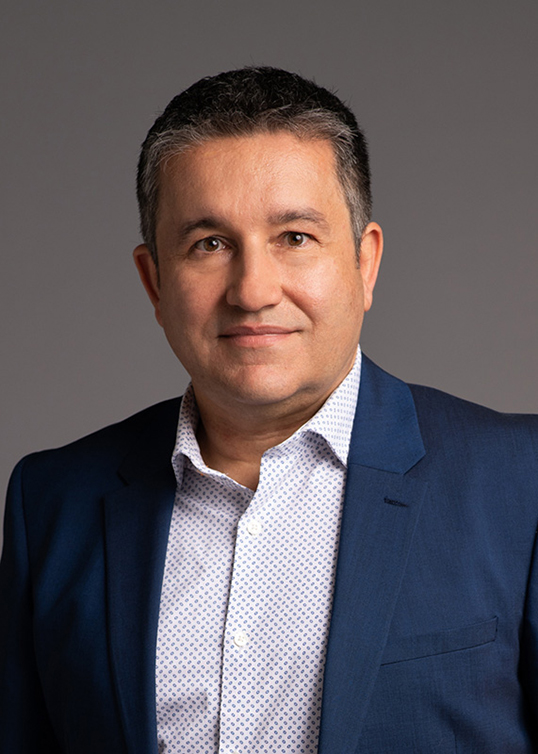
Alfred Hermida. | Photo courtesy of UBC.
For Alfred Hermida, PhD, and professor at the UBC School of Journalism, Writing and Media, the theme captures an important aspect of how we encounter information today.
“Journalists and news organizations no longer have the same control over what information reaches the public,” he says. “What we see is increasingly shaped by algorithms, social networks, the platforms we use and the choices we make, sometimes without even realizing it.”
Global Media and Literacy Week enters its fifth iteration this year from Oct. 24 to 31. First created by UNESCO in 2021, the week was commemorated to emphasize the importance of factual, timely, targeted, clear and accessible information available in all languages and based on facts. During the week, UNESCO co-hosts a global conference with one of its Member States gathering the Global Media and Information Literacy community, while stakeholders around the world organize events to promote the subject.
The times are a-changing
According to Hermida, the difference in platform has “fundamentally changed” the relationship between audiences and the media.
“People have much more choice over how they access information, and they can also participate in producing, sharing and discussing it,” he says. “But that also means making sense of a much more complicated information environment.”
The rise in generative AI – and in society’s reliance on it – “adds a new dimension” to this relationship, Hermida points out.
“We can use AI as a critical friend, to challenge our assumptions, help us think through complex questions or suggest different ways of looking at an issue,” he says. “At the same time, generative AI makes it much easier to produce convincing but misleading information, including fabricated images, videos and stories that can be difficult to distinguish from genuine material.”
Lubna Yusuf Moosa, PhD, and a journalism professor at Kwantlen Polytechnic University, believes that the Global Media and Literacy Week’s current theme shows how everyone plays a part in how information is seen and shared.
“Sharing a post or forwarding a message might seem small,” she says. “But it can shape how others understand an issue, crisis or conflict. In my opinion, doing our part can refer to verifying a story’s source, reading beyond the headline, or pausing before sharing something that upsets or pleases us.”
Everyone, young and old
The week’s flagship events included the ORBICOM 2026 Annual International Conference happening Oct. 26–30 in Montreal. Among the highlights, the Youth Hackathon will demonstrate the power of young people to drive innovation and create impactful solutions for today’s information environment.
“Younger generations face some of the most pressing challenges of our time,” says Hermida.
“They are growing up with the consequences of climate change, rising inequality and a housing crisis that makes it increasingly difficult to imagine an affordable future.”
It is for this reason, Hermida says, that we need media that not only takes their experiences and concerns seriously but creates the space for them to contribute to the conversations and decisions shaping their lives. It is also why he believes media literacy can give young people the skills and confidence to engage more thoughtfully with the information they find and share and “participate more fully” in public life.
“Young people are no longer simply audiences for information,” he says. “They can also create it, share it and contribute to public conversations.”
Moosa also believes young people deserve to have their concerns and curiosities heard.
“Young people can help make learning materials, create videos, lead talks with their friends and suggest ways to improve online spaces,” she says. “They offer perspectives teachers and policymakers might miss.”
Those perspectives, she adds, may be especially important in shaping the diversity of the media landscape.
“For most of us, what we know about a community often comes from what we see in the media,” specifies Moosa. “If we only see stories about conflict or crime, we get a narrow view of who those people are. Media literacy helps us spot stereotypes and question ideas. It also pushes us to find stories where people speak for themselves.”
Keeping an open mind
Ultimately, Hermida believes media literacy can help us develop the habit of asking “basic questions” about the information we encounter, how factual it is and why someone would share this information with us.
“We’re surrounded by information, much of it reaching us without us actively seeking it out,” he says. “Yet we rarely stop to think about the forces that shape this information or why we encounter some things and not others.”
For him, media literacy means “developing the curiosity and judgement” to make informed decisions on what we believe – but also about recognizing our agency in the process.
“We can make more conscious choices about where we get our information, how we assess its reliability and whose voices we pay attention to,” says Hermida. “Understanding how digital media works helps us become more active and informed participants in the media environment, rather than simply accepting whatever appears on our screens.”
For more information visit: www.unesco.org/en/weeks/media-information-literacy


Comments will load once you reach the end of the article.