
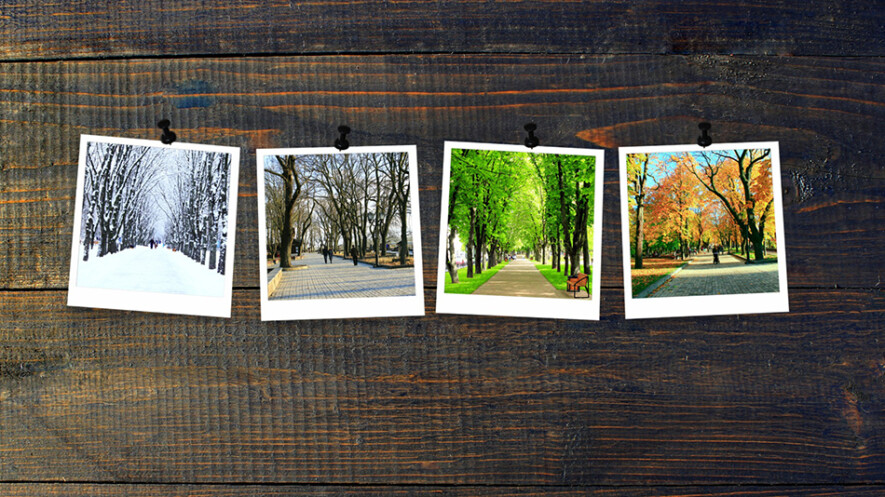
Over this past year, our reporters found themselves covering everything from new artistic ventures and revived community festivals to big discussions about technology, identity and how we stay connected in a rapidly changing world. We met people who were experimenting, rebuilding, celebrating or simply finding new ways to belong in the city they call home. So before we turn the page to a new year, let’s take a look back through some of the stories we covered in 2025.
Winter: Quantum science, Peruvian food and genealogy research
Back in January, in the first issue of the year, editor Lillian Liao covered UBC’s Geering Up program, which celebrated both its 30th anniversary and five years of quantum outreach. Liao spoke with educator Ella Meyer, who said kids grasp quantum ideas more easily than adults because they’re not burdened by preconceptions. Meyer’s team used simple analogies and careful language to make complex concepts “correct enough” for young learners. They adapted activities for remote communities, navigated age and gender barriers and prioritized creativity over jargon, aiming to spark curiosity and show that quantum technology is a fundamental tool shaping the future, almost like rediscovering fire.
In February, reporter Xiao Qing Wan spoke with Ricardo Valverde, the chef and owner of the Peruvian-themed restaurant Suyo, which earned back-to-back Michelin recommendations. Valverde credited a “let others shine” leadership style with a modern take on Peru’s richly multicultural cuisine for his successes. Drawing on influences from several countries, Valverde crafted dishes balancing tradition with innovation to satisfy both Peruvian diners seeking familiar classics and newcomers craving creativity. Though investors were eager to take the concept abroad, Valverde remained focused on keeping Suyo evolving, fun and fresh for returning guests.
In March, reporter Alison MacDonald covered how the Vancouver Public Library was supporting people with an interest in tracing family roots, including specialized support for those exploring Chinese and Indigenous ancestry. MacDonald spoke with librarian Grace Hama who said patrons’ motivations range from curiosity and family storytelling to medical needs, dual-citizenship applications and legal requirements. Although challenges persist due to missing records, name variations and the emotional weight of certain histories, Hama described the work as rewarding.
“They want to understand who they are and where they came from or to collect family stories to pass on to a new generation,” she said. “I enjoy helping people with their research and connecting them to their family stories. It’s like a puzzle you are trying to put together.”
Spring: King’s Day, Kōdō and Kurdish resistance
Reporter Oscar Velez Ruiz Gaitan wrote about the Dutch holiday King’s Day in April. Gaitan spoke with Harri de Wijze, a chair of De Esdoorn, a Dutch language and cultural school, who said the holiday is open to everyone to celebrate. De Esdoorn held events which featured children’s games, nostalgic activities like bicycle decorating and the playful classics spijkerpoepenand koekhappen. The event reflected broader Dutch customs such as orange-themed outfits, lively street performances and tax-free flea markets, all rooted in national pride tracing back to Willem van Oranje who led the revolt against Habsburg Spain to create an independent Netherlands.
In May, the Dōjin Japanese Arts Society presented a rare introduction to Kōdō, the traditional Japanese “way of fragrance,” offering audiences a chance to engage with an art form unfamiliar even to many in Japan. Reporter Amélie Lebrun spoke with Karah Foster and Maiko Behr of the society, who described Kōdō as a contemplative ritual that elevated scent into an art encouraging subtlety, reflection and appreciation of nature and emphasized the rarity of experiencing formal incense ceremonies in Canada. Together, the organizers aimed to give the public a peaceful space to slow down, connect with traditional aesthetics and rediscover the quiet beauty often overlooked in modern life.
“[Kōdō offers] endless avenues for learning about the rich culture of associational networks of poetic, seasonal and historical references that have distinguished Japanese aristocratic culture for more than a millennium,” Behr said.
In June, reporter Diary Marif spoke with playwright-director Rzgar Hama about his play A Smoke Behind the Rope and his efforts to use theatre to illuminate the real experiences of Kurdish political prisoners. Inspired by testimonies, letters and biographies of activists facing torture, execution and cultural suppression, the play portrayed characters Gulnaz and Farhad during the most harrowing night of their lives, reflecting the struggles of countless Kurds fighting to preserve their identity. He hoped future productions would deepen the play’s impact and raise awareness of ongoing abuses worldwide.
Summer: Circulation, constellations and culture days
In July, reporter Andreina Romero wrote about Circulation, a permanent public installation for AbCellera’s Mount Pleasant buildings, transforming invisible sound waves into brightly coloured metal sculptures that explored perception, healing and the often-overlooked experiences of marginalized people. For artists Sanaz and Mani Mazinani, it offered both a public encounter with invisible phenomena and a way to create art their own children could delight in and remember. Grounded in ideas ranging from Vedic sound-healing traditions to modern research on how sound affects molecules, the installation aimed to make art joyful and accessible while fostering greater awareness of one’s environment.
In August, I wrote about my experiences chasing true darkness in the Canadian Rockies this summer, specifically gazing up into the clear night sky in Jasper National Park, one of the world’s largest Dark Sky preserves. After capturing some night sky shots, I absorbed the sounds and life of the nocturnal landscape, from rustling trees to distant wildlife moving freely in the natural dark. The experience left me both drained and renewed, a reminder that despite modern light and noise, and not being able to see the night sky regularly with all the light pollution in Vancouver, the universe was still there.
“It was about showing up, for the stars and for the reminder that above all the noise of modern life, a universe still waits, still shines,” I wrote.
In September, reporter Luc Mvono spoke with a couple of emerging artists like mixed Oji-Cree creator Ashleigh Giffen and Chilean actor-director-puppeteer Lore Andrea during B.C.’s Culture Days. Giffen used her workshop to promote playful, inclusive, community-rooted storytelling grounded in Indigenous traditions. Andrea, who had grappled with cultural and linguistic isolation after immigrating from Chile to Victoria, led a bilingual mask-making workshop encouraging participants to explore identity through craft and recycled materials. Together, their events reflected Culture Days’ core mission: breaking down artistic barriers, elevating diverse creative practices and fostering meaningful connections through hands-on participation.
Autumn: Ru’ya and Birdy
In October, reporter Zuzana Krejcikova wrote about Gordon Grdina’s project Ru’ya, which brought an ensemble of globally rooted musicians to Christ Church Cathedral. Drawing on two decades of collaborative, cross-cultural work, Grdina assembled performers skilled in Turkish maqam, Arabic vocal traditions and diverse improvisational styles, writing music that allowed each artist’s strengths to shape the whole. With musicians from all around the world, Ru’ya embodied Grdina’s vision of celebrating individual traditions while revealing their shared beauty, aiming to leave listeners feeling more connected to creativity, compassion and one another.
Last month, reporter Jeff Lee interviewed Taiwanese choreographer and dancer Lai Hung-Chung, who brought his company Hung Dance to the Vancouver Playhouse with Birdy, a work born from years of questioning cultural tradition and exploring the blurred space between human and bird. Lai fused influences ranging from Chinese folk dance and tai chi to Birdy, using discipline, hybridity and narrative-driven movement to evoke themes of identity, imagination and escape. Ultimately, Lai saw the play as a meeting point of cultures and an invitation to inspire more Taiwanese artists to pursue dance.
We hope our stories inspire in you the values of diversity, community and love of culture, as much as it does in us. On behalf of everyone at The Source newspaper, we wish you a safe and happy holiday season and an amazing new year – we will see you in 2026!


Comments will load once you reach the end of the article.