
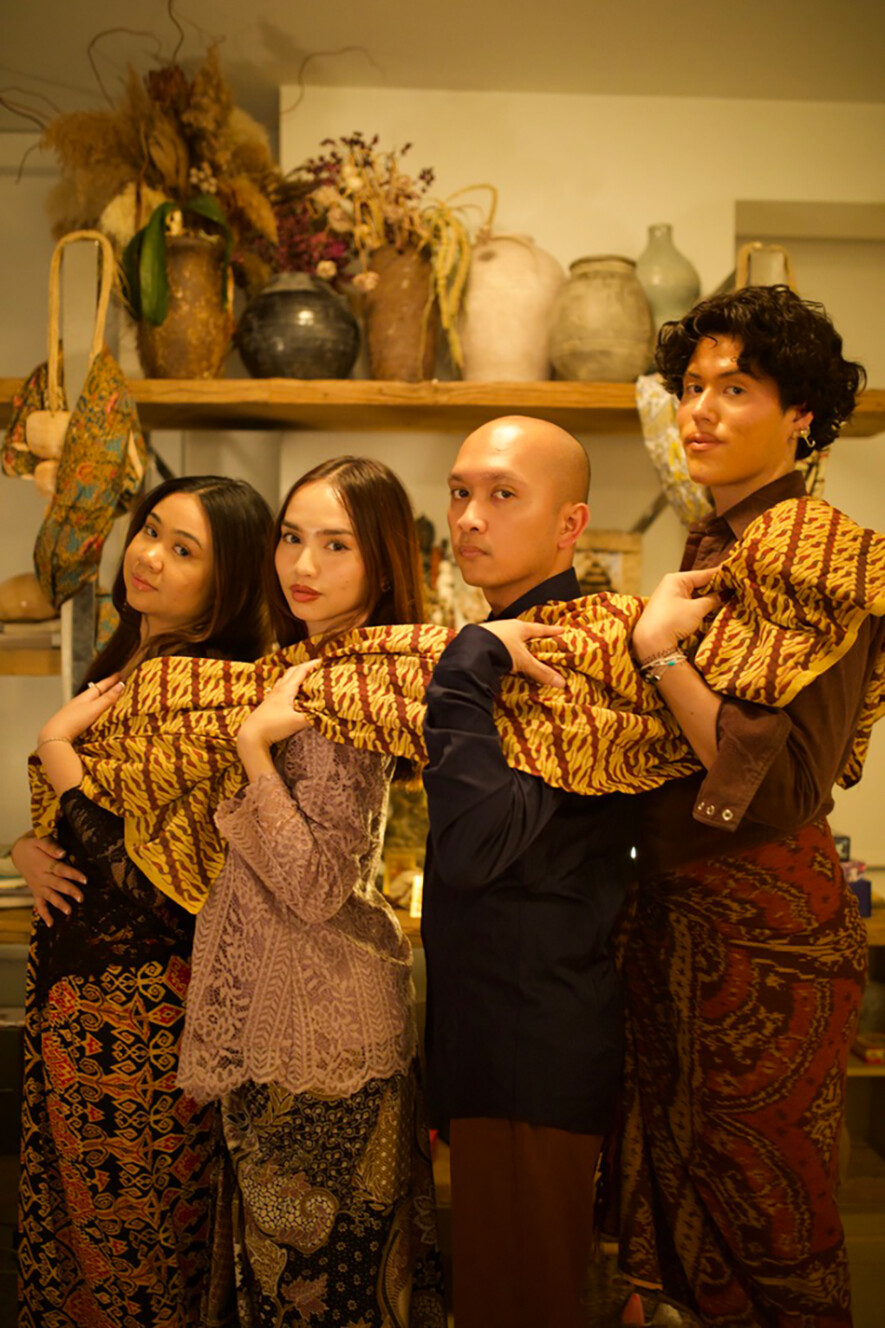
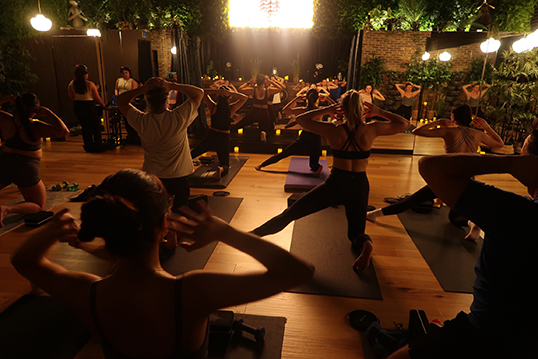
NusaHaus’ Barre-Dansa intiative.
“When we say open house, we mean open house – open to anybody – you bring people you don’t know to your house and feed them,” Qairyn says. “It could be a close friend, your co- workers or a classmate you talked to one time.”
“People back home are super accommodating,” Ryffa adds, noting that people are careful not to serve Muslims pork or alcohol. “If there’s a Chinese New Year Celebration, there’ll usually be halal options.”
To celebrate Lunar New Year, the sisters plan to organize an intimate dinner. NusaHaus will also host KopiJam – a week-long art exhibition showcasing Nusantara talent – at VS. Creative Lab (1884 Main St.) from Feb. 20-28. KopiJam means “Coffee Hour” and refers to the Malaysian Kopitiam culture, a space for people to lepak, or simply, hangout.
Finding community
Third spaces are rarely found in North America, but they are common to southeast Asian cultures, adds Ryffa. The sisters established NusaHaus to fill what they recognized as a gap in the city’s social fabric.
“We were part of the SFU Malaysian-Singaporean Students Club, so that’s how we found our community,” Ryffa says, adding they first came to Vancouver as high school students. “As we both graduated, it was really hard for us to find that community elsewhere.”
Qairyn adds that Southeast Asians come to Vancouver for various reasons such as work or marriage which can make it difficult to form a community.
“We started [NusaHaus] as a community for [the] Southeast Asian diaspora,” says Ryffa, noting their reach includes those from Singapore, Malaysia, Brunei and Indonesia.
When the sisters speak about community, they do not describe it as an abstract idea or a polished mission statement. Instead, they talk about the practical, everyday lived realities: sharing food, participating in fitness classes or sitting at mahjong tables. The goal is simply having a place to sit and exist together – as embodied by the “open house” principle.
“We wanted a space where everyone can enjoy themselves,” Qairyn says. “I lived in Malaysia last year, and it was different to see how everyone is co-existing and constantly accommodating each other.”
“It’s easier for people to assimilate to something they already do on the day-to-day and adding a little bit of culture to it,” Ryffa adds, noting how the organization welcomes those who are not familiar with Nusantara culture. “We’re not too picky on what type of events we hold because, at the core of it, we still incorporate Nusantara culture into those events.”
Bridging of cultures
The organization’s name itself carries layered, cross-cultural significance: Nusa, derived from the term Nusantara, refers to the Malay Archipelago. The second half of the organization’s name – haus – embodies what Qairyn refers to as a “double entendre.” It means ‘house’ in German, reinforcing the founders’ idea of home and gathering. In Malay, haus means “thirsty,” symbolizing a hunger for culture as well as a deep desire for belonging and community.
“There’s definitely shared cultures – especially [between] Malaysians, Indonesians, Singaporeans and Bruneians – because there is a mix of Malay, Chinese and Indian people co- existing for generations,” says Qairyn.
While the cultures are still distinct, the sisters emphasize an openness to all religions. A family may include members who are Buddhist, Christian or Muslim. Family members will visit each other during different holidays, such as Eid or Diwali, regardless of their individual backgrounds.
“In Malaysia, usually for Eid, the Chinese co-workers will stay in their office and let the Malay co-workers take two weeks off,” Qairyn says. “If it’s Chinese New Year, the Malay workers will let the Chinese workers take the days off.”
Lunar New Year customs include not sweeping the floor on the first day of the year and wearing traditional clothes for a week. The sisters have also observed more public celebrations in Malaysia.
“I find that it’s similar to any [other] type of diaspora, sometimes the traditions are more historic,” Ryffa says. “In Malaysia [and] Singapore, we have this thing called a Prosperity Toss.”
Known in Cantonese as “yusheng” or “yee sang,” the Prosperity Toss is a raw fish salad. Participation in any cultural celebration is flexible. People may “pick and choose” what they take part in, while still showing up to support one another. In the sisters’ culture, acts of accommodation are treated as a given: If someone is Muslim, pork and alcohol are simply left off the table. Back home, this kind of consideration is not seen as exceptional, but as a natural expression of care and respect within the community.
Looking forward
The sisters plan to register NusaHaus as a non-profit organization – opening the door for funding and grant opportunities. They hope to host larger-scale events and connect with a wider community, including those beyond the Southeast Asian diaspora.
“We love sharing our culture, our food, our music with people,” Qairyn says. “We want it to be a space where everyone feels welcome.”
That same ethos informs how NusaHaus practices community care. Community is framed as a shared responsibility – something that requires participation, not just belonging.
“Community is being a villager in the village,” Qairyn says. “A lot of people want the privilege of having a community, but they don’t want to do their part.”
In contrast, many of NusaHaus’ contributors volunteer their time and skills. These generous community members include DJs, fitness instructors and a registered clinical counsellor who has offered sliding-scale and free options.
This year, the organization also plans to host a summer night market and a professional development workshop. The latter will bring together different experts – including chefs and engineers – to exchange knowledge.
“We’re just trying to find a place for people to come, hang out and just be with each other,” Qairyn says.
Updates about upcoming events can be found on NusaHaus’s Instagram, where the organization continues to grow – with gathering, collaboration and shared meals.
For more information on the upcoming art exhibit, see https://partiful.com/e/kINwpv2fC5XH04DTeyHL
For more information on NusaHaus, see www.instagram.com/nusahaus.ca


Comments will load once you reach the end of the article.