
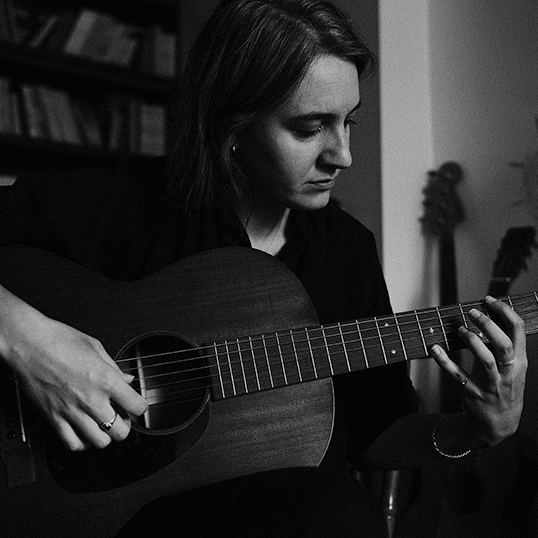
Myriam Gendron. | Photo by Justine Latour.
“The innovative music community in Vancouver, which is more traditionally our audience, is mostly Anglophone,” shares Cole Schmidt (artistic director) and Amélie Malissard (board member) of Barking Sphinx. “We wanted to invite them to discover another side of ‘Francophonie,’ and to welcome Francophone audiences to different musical experiences.”
Aside from this festival, other institutions – including Simon Fraser University (SFU) – are celebrating Francophone culture in their own ways. SFU’s Printemps de la Francophonie (now until Apr. 2) is hosting a series of free cultural, academic and social activities.
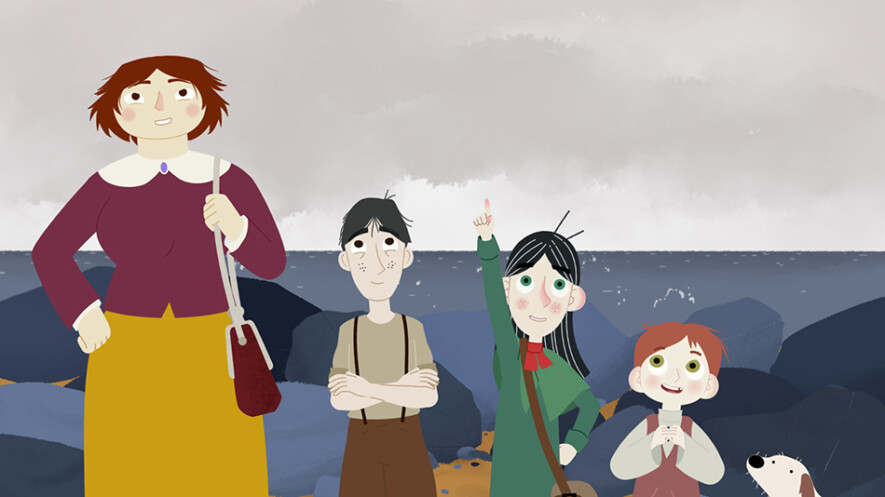
The activities include a screening of Swiss director Marcel Barelli’s Mary Anning – which pays homage to the groundbreaking British paleontologist.
Highlighting Francophone musicians
“Unwritten Weekend was inspired by the desire to celebrate music, art and community,” add Schmidt and Malissard, sharing all the invited artists question “boundaries of sound and musical genres.” “At its core is the idea of gathering and exchange.”
The 2026 edition expands the festival to three days – showcasing around 25 regional artists in addition to the three featured Francophone musicians. The first day also features two new venues: Alliance Française Vancouver and 8EAST.
Its programming reflects diverse art forms, including different musical styles. An art exhibition – featuring five local visual artists engaging with different media and a live DJ – will take place on Saturday and Sunday afternoons at The Hargrove.
“While some programming draws on experimental music, the festival is designed to be accessible,” the Barking Sphinx representatives share. Events include day and night concerts, family workshops and afternoon DJ sets. “Ticket prices are kept as low as possible, with some free events; hopefully, there’s a little bit for everyone.”
The three featured Francophone artists were chosen for their reputations as “leading artists” in international innovative music. The organizers were looking for artists who could improvise with local musicians and engage with audiences through events.
“It was also important for us to explore alternative ways of understanding what ‘Francophone’ culture means and to attempt to contextualize the worldwide presence of French within its colonial origins,” adds Schmidt and Malissard.
Lebanese Canadian musician Moumneh will host an interactive listening session (March 29, The Hargrove) playing music from SWANA-region artists, inviting audience discussions. His performance on Saturday night will be the Vancouver premiere of his new solo work.
“He melds tradition forms such as the buzuk (a Lebanese lute) and Arabic modal singing with experimental sounds – including effects, electronics and synths,” the organizers add. “It was also interesting to us that for each of [the Francophone artists], being Francophone is a different lived reality, and French plays a different role in their creative processes.”
Another Francophone artist Amadou – a self-taught electric bassist and sound sculptor – will perform on the festival’s first night, improvising with local musicians at 8EAST. The organizers see Amadou’s approach as rooted in “raw intuition and freedom.”
“Her music moves from dense walls of sound to simple, clear rhythmic structures,” Schmidt and Malissard describes – adding the artist will also perform the North American premiere of her new solo set on Saturday evening. “The piece explores improvised textures built around West African rhythm samples, melodic fragments, and voice – weaving ancestral echoes with radical sonic freedom.”
Music from poetry
Featured artist Gendron looks forward to hosting a family-friendly Atelier at Alliance Française Vancouver on March 28. Participants will record voices and sounds, creating a modern soundscape for a well-known traditional song.
“Then, we will all sing it together,” Gendron says. “My bet is that the soundscape will help us to anchor the song in our ‘here’ and ‘now,’ thereby uncovering a fruitful dialogue between the past and the present.”
Her first album, Not So Deep as a Well, sets American writer Dorothy Parker’s poems to music. She came across “a beautiful pink-clothed 1936 edition” of Parker’s collection by the same name – not knowing the literary critic and satirist was also a poet.
“I read the first poem, ‘Threnody,’ and I heard a song,” Gendron recalls of the “once-in-a-lifetime magical encounter.” “I flipped through the pages, and it kept happening – but I had never written music before!”
Within a few months, Gendron – “bewitched” by Parker’s spirit – had written an album. The sadness of Parker’s poems helped the musician process and express her own feelings.
“My songs are sad, but I think they’re also full of light,” she says. “All my work is an effort to dance with sadness: I don’t want to ignore it, but neither do I want to let it smother my drive to live.”
The musician also integrates modern sounds and experimental elements into traditional songs. Gendron’s favourite traditional French music are the laments; she is drawn to their “unusual rhythmic and melodic structures”” – creating both a strange and familiar feeling. Her third album, Mayday, uses both English and French.
“I just wanted to make them sound modern and relevant today,” Gendron shares of her re-imagining of French songs. “I think they can still speak to us in the most profound way if we manage to remove the dust.”
The musician identifies as a “witness” through this process – making herself available to the music and letting them pass through her being.
“There’s no recipe or clear intention,” she shares. “The wind is blowing; it’s all about being able to listen.”
Gendron moved a lot throughout her teenage years – including stays in Gatineau, Paris and Washington, D.C. These experiences created a need for “a strong inner space” – one that she now visits when working on her music.
“Travelling as a child made me sensitive to the fact that behind the languages we speak, we’re all very much alike,” she shares – adding this sense of unity is also key to her music. “What brings us together seems more interesting to me than what divides us.”
Now living in Québec, Gendron finds herself lucky to be surrounded by well-protected Francophone culture – yet she remains aware that some North American Francophone communities are disappearing.
“With the growing American cultural hegemony, nothing should be taken for granted,” she adds. “We should continue to sing our folk songs to our kids.”
Gendron will also perform at Alliance Française Vancouver on the festival’s first night.
An anachronistic character
Swiss director Barelli’s Mary Anning depicts the famous British paleontologist’s youth. It will be screened with English subtitles at Alliance Française Vancouver on March 28 as part of SFU’s month-long Francophone culture celebration. Barelli’s vision was to portray the “true story of a child,” all through a character he sees as well ahead of her time.
“There are many children in cinema, but very few real children,” he shares. “[Anning’s] strength and desire to fight for what she believed in at a time when women and children couldn’t claim much for themselves are inspiring.”
The director sees Anning as a precursor to recent youth activists, like Greta Thunberg. Passionate about paleontology, Barelli has known about Anning since his childhood.
The creation of Mary Anning involved extensive research. While some changes were necessary to transform Anning’s story into a family-friendly film, Barelli found it important that the film retains a “documentary aspect” – with many scenes inspired by real events. These include Anning discovering fossilized ink and being struck by lightning.
Barelli trusted a good friend and fellow director, Marjolaine Perreten, with the film’s artistic direction.
“I was so happy she accepted because I love her visual universe; it’s very close to children’s book illustrations – both gentle and raw at the same time,” he shares. “I think she successfully captured the atmosphere of the small village of Lyme Regis in 1811 while keeping the overall look modern.”
Collaboration remains a fond memory for Barelli. He recalls sharing breakfast and laughing with his small team – an experience that he wished would last forever. Some of his favourite scenes involve Anning’s visions.
“Mary is the only one in the village who understands the true nature of fossils, so she is the only one who imagines them more or less as they actually were,” Barelli shares. “The goal of these scenes is to show the audience what she sees in her mind.”
The director hopes to draw more attention to Anning’s story – the courage and resilience of what he sees as an “extraordinary character.”
For more information on Unwritten Weekend festival, including a full list of performances and activities, see www.barkingsphinx.com
For more information on Myriam Gendron, see www.myriamgendron.bandcamp.com
For more information on the screening of Mary Anning, see www.alliancefrancaise.ca/event-rsvp/cinema-printemps-de-la-francophonie-moment-cinema-en-famille-mary-anning
For more information on Marcel Barelli, see www.marcelbarelli.com


Comments will load once you reach the end of the article.