
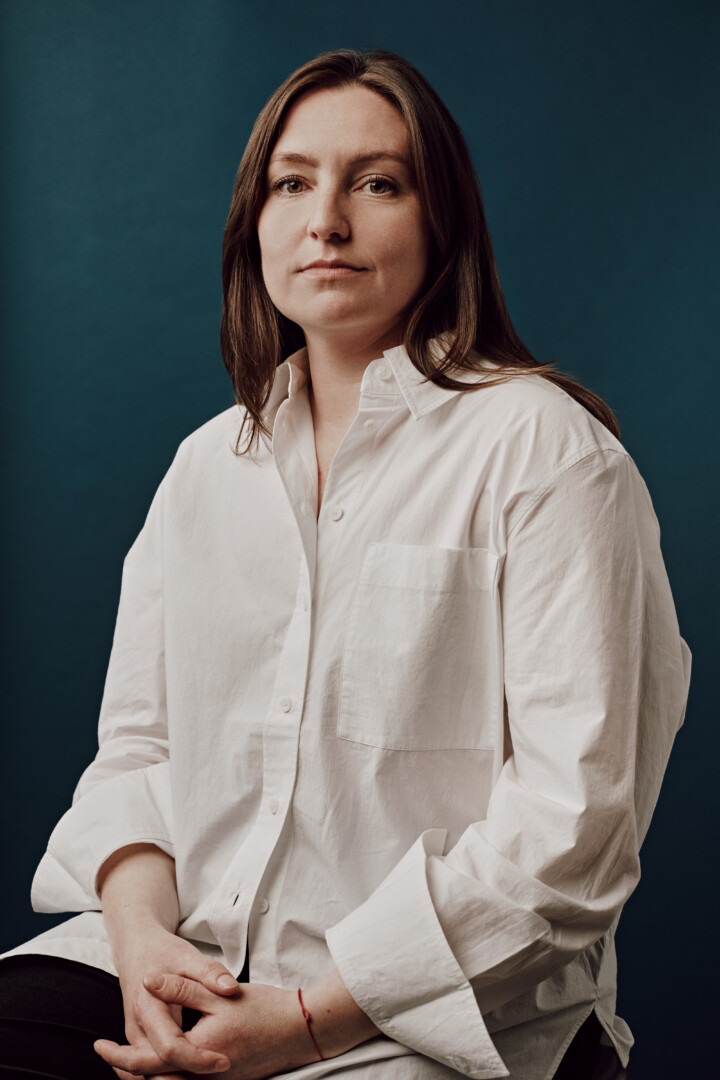
Pascale Schittecatte-Ciric | Credit Grady Mitchell.
Newcomers have so much to offer in terms of supporting B.C.’s farming communities, says Pascale Schittecatte-Ćirić, program manager of Young Agrarians’ (YA) B.C. Land Matching Program. With the number of farmers dwindling, Schittecatte-Ćirić sees newcomers as essential to the province’s food security.
“If people want to come to Canada and farm, that’s good news,” she says. “Often times, folks that are newcomers have experience dealing with climatic challenges or different climates that we’re increasingly experiencing here in B.C.”
Droughts, for example, are becoming common in the Okanagan area. According to Schittecatte-Ćirić, local farming communities have created “extension services” teaching farmers how to adapt. One option is looking at more drought-tolerant cattle.
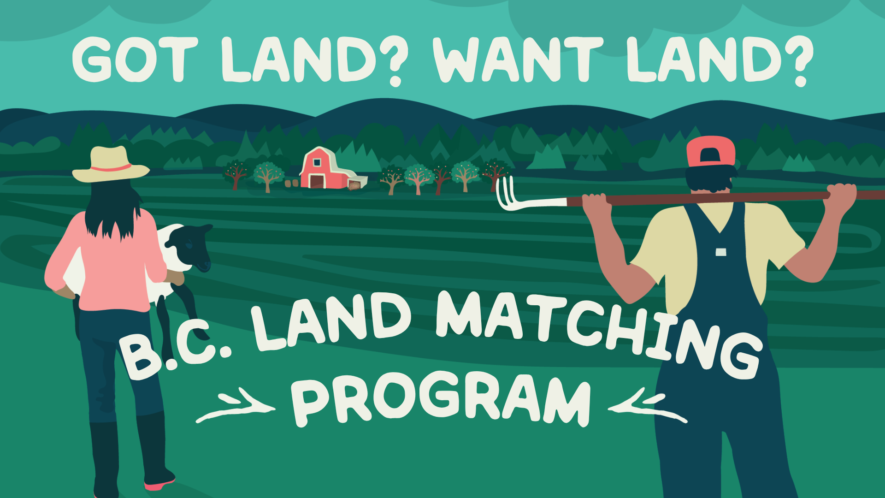
YA operates the B.C. Land Matching Program which connects farmers with landholders. The program is open to those with legal status to live and work in Canada. It typically receives over a thousand inquiries a year.
Barriers to farming
According to Schittecatte-Ćirić, access to land, capital and knowledge are the three biggest barriers to entry for new farmers. YA, a grassroots organization started in 2012 by farmers for farmers, addresses all three barriers.
“Access to working capital is something we’re still doing a fair amount of policy and advocacy work around,” Schittecatte-Ćirić says. “If you don’t come from family farm or have inherited wealth, how do you afford the finances to start a new business?”
Their land access work—driven by conversations with farmers—extends beyond the B.C. Land Matching Program.
“Around 2013, we were seeing and hearing from a lot of folks that they needed support to get on land,” Schittecatte-Ćirić says. “Land access is essentially the number one challenge for new and young farmers.”
Without much capital, a traditional land purchase isn’t available to many up-and-coming farmers. YA started developing educational resources and workshops—supporting collaboration between farmers/land seekers and landholders.
This initiative’s success led to a land matching pilot project beginning in 2016. The pilot project focused on the Metro Vancouver and Fraser Valley regions.
“A facilitator or land matcher would help to guide participants, match them together and help them facilitate their matching relationship until it was at the point where they could write a legal agreement to outline their land sharing relationship,” explains Schittecatte-Ćirić.
A mutually beneficial relationship
In 2019, the B.C. Land Matching Project became fully provincial. Schittecatte-Ćirić says the program best serves “new entrant farmers.”
“There’s no hard definition of who that is, but that would be someone who has several years or season of farming under their belt, perhaps as an employee of a farm or a farm manager.”
After matching, the land seeker-landholder relationship develops according to each parties’ needs. The program supports land seekers in developing their business plans—which becomes key to the matching process.
“Part of the reason we support land seekers to make business plans is so that they have a really defined idea of what they are going to be farming [and] how they are going to do it,” says Schittecatte-Ćirić. “That, in turn, enables them to more clearly communicate with prospective landholders.”
Some land seekers work largely independently; others are involved in a mentorship with the landholders.
“Sometimes a farmer might say, ‘Hey, this is my very first time, and I’m just looking for a space for a year or two years to trial a few things and get going,’” says Schittecatte-Ćirić. “And conversely, someone might say, ‘I’m planting new orchards so really a fifteen-to-twenty-five-year agreement is what I need to do this.”
According to the program manager, it typically takes farmers five years to break even or see a return on their investment. YA offers comprehensive templates, designed by lawyers, to help parties draw out their land use agreements.
“What you would see in there are standard things that everyone would recognize from a lease: How long does it last? What does it cost? What area is included and not included?” Schittecatte-Ćirić adds that land matchers—as a neutral third party—support parties to personalize the templates. “Everything is checked by and vetted by the lawyers for free as part of the program.”
Supporting local economies
Schittecatte-Ćirić sees the program as benefiting both land seekers and landholders. She shares that there’s a variety of reasons why landholders may not be farming themselves.
“They might be older farmers who are retiring, and they don’t have family members to pass the land to but the want to see it produced,” the program manager adds. “Or it might be folks who—for whatever reason have purchased farmland—maybe they liked the area or are ecologically minded, but they are not trained farmers.”
Rather than focusing on corporate farms, the program is primarily involved with what Schittecatte-Ćirić calls “small scale ecological agriculture.”
“We’re not talking about 8 to 10 thousand mono-crop acres in one region,” she says. “We’re talking about ecological diversified farms.”
She adds that these farms directly impact local economies, providing work and training opportunities. They support economic circulation: investing money that goes into the farm back into local communities.
“They also create more climate resiliency,” the program manager adds. “If you get a big cold snap that takes up a bunch of your fruits [,and] you are in a diversified farm, you have other crops you can rely on.”
During emergencies, these farms and their shorter supply chains become lifesavers. When highways or other supply routes are closed, they support local communities’ agricultural needs.
“If we don’t have enough new and young farmers coming into the industry, we have no stability in the food system,” Schittecatte-Ćirić observes the sharp decline in farmers across Canada, coupled with the increase in costs of land. “Right now, there’s a lot of talk about making Canada strong, but we can’t be strong if we’re not fed—that’s a basic human need.”
The UN recognizes June 18 as Sustainable Gastronomy Day. It is an opportunity to reflect on B.C.’s food sources.
For more information, see https://youngagrarians.org/.


Comments will load once you reach the end of the article.