

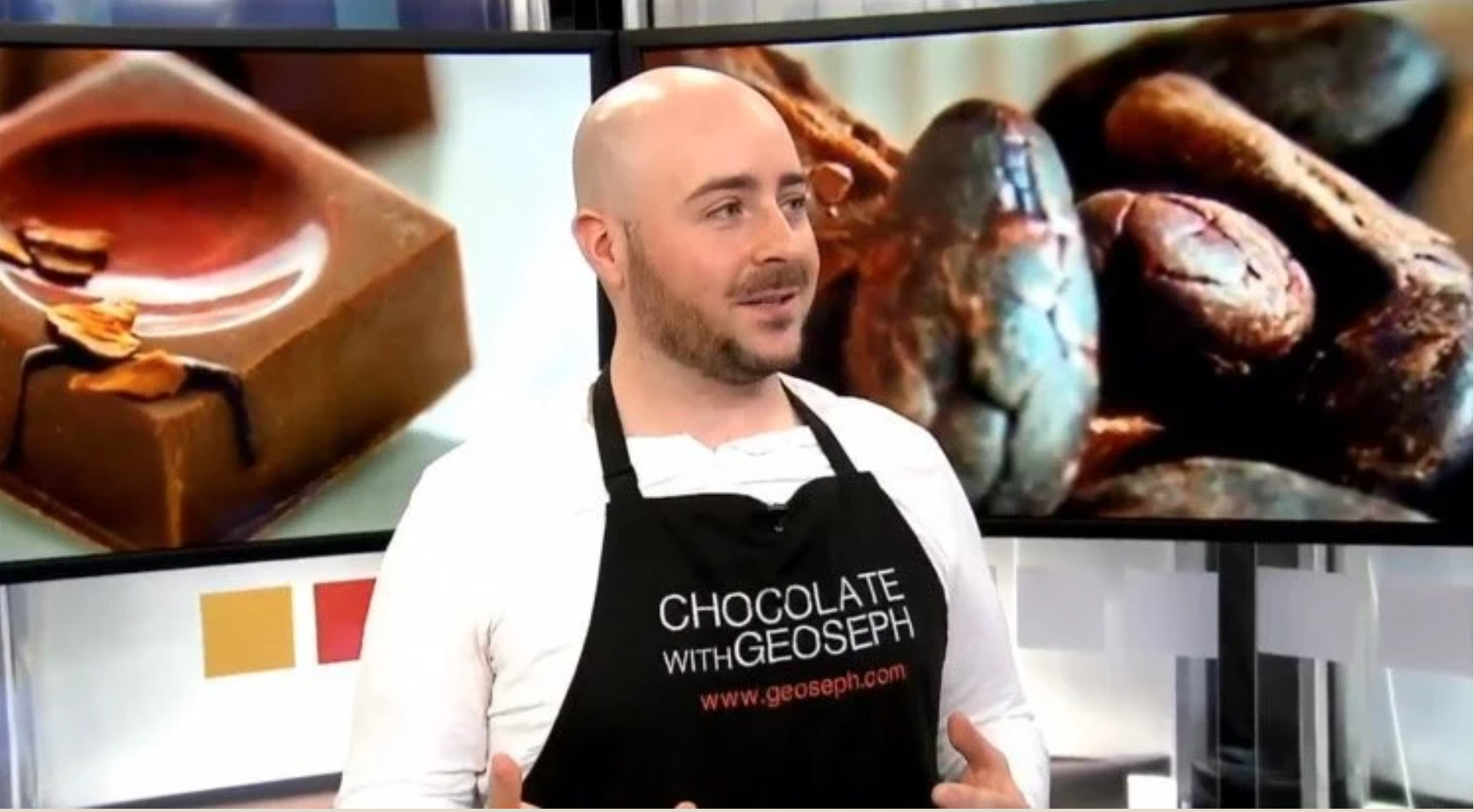
Geoseph Domenichiello on CBC | Courtesy of The Science of Chocolate.
The impression that the best chocolate originates from Europe—particularly Belgium, Switzerland or France—is outdated, says Geoseph Domenichiello, founder of The Science of Chocolate. In fact, Domenichiello—who is a chocolate sommelier, master chocolatier, and chocolate maker—has recently added new makers from Uzbekistan and Iran.
Another misconception, he adds, is that chocolate can only be consumed as a sweet or dessert. According to Domenichiello, Italians created chocolate anchovy lasagna hundreds of years ago.
“In its origins in Mesoamerica, chocolate was more of a flavourful savoury drink with corn and chili and herbs,” Domenichiello adds. “We also have evidence that Mesoamericans enjoyed chocolate in savoury foods like fish and tamales.”
July 7 is recognized internationally as World Chocolate Day—an opportunity to enjoy and learn about one of the world’s most prized commodities.
Innovating chocolate
Since 2008, The Science of Chocolate has been educating the public with evidence-based research. Domenichiello’s business offers a free chocolate school, virtual chocolate tastings and chocolate tutoring.
“I like to push the boundaries of what people expect chocolate to be, either in the unique single-origin bars or the strange, flavoured bars,” he adds.
He hopes to see more innovative approaches to chocolate in Vancouver, including pairing fish or lamb main courses with chocolate. Or even chocolate houses that offer “a range of single-origin drinking chocolate.”
“Or using cacao in ways that go beyond the bar or what you would expect, perhaps in flours or spirits,” Domenichiello adds. “Full-on creativity is a huge risk, but something I say could do very well if approached by the right chefs [and] businesspeople.”
Domenichiello himself is a big fan of drinking chocolate. He often blends expensive chocolate bars into drinks—a consumption method that both “uses less and costs less.”
“There is a lot of labour and cost that goes into taking chocolate and shaping it into perfect bars, wrapping them individually,” the chocolatier points out that storage in temperature-controlled rooms is another added cost. “With the growth of non-caffeinated lattes and drinks making their way into coffee shops, it makes sense to introduce single-origin drinking chocolates that are frothed up to perfection.”
An evidence-based approach
As its name suggests, The Science of Chocolate stems from Domenichiello’s science background; the chocolatier studied biology in university. He wanted to create a website presenting evidence-based information about chocolate, allowing consumers to draw their own conclusions.
“Since chocolate is a commodity, the information about it is often over-embellished or curated to the point that it becomes quite inaccurate,” says Domenichiello, who enjoys writing research summaries and blog posts. “The nerd in me loves reading long dry research papers on cacao and chocolate; it’s better than any fiction novel or Hollywood movie.”
His website now also informs professionals in the industry. Domenichiello finds hosting in-person and virtual events most exciting.
“I’m very excited and passionate about the science of chocolate and what I do, and many have told me that comes across in my events,” he shares. “That’s really the most fun [part].”
Domenichiello created the Bean-to-Bar Map, an application that supports users in finding bean-to-bar chocolate shops in their city. The idea arose from one of his chocolate tasting sessions.
He adds that, the bean-to-bar market “can be quite cut-throat.” Newer and smaller makers need opportunities to showcase themselves.
“I wanted a platform that was free and accessible to the small makers anywhere they are in the world, be it in a small town in Canada, Brazil or Nigeria,” Domenichiello shares. “The bean-to-bar sector is still controlled and directed by players in Europe, who often don’t play fair or kind, so this map allows these small makers to be noticed.”
For World Chocolate Day, Domenichiello wants consumers to be cautious of chocolate claims. He adds that, while chocolate is indeed beneficial to one’s health, some of these benefits may be “overembellished or overinflated.”
Another example is the claim that lab grown chocolate can solve sustainability concerns. Many calls for lab grown chocolate, he says, are led by the “same companies who have created” those environmental and ethical issues.
“Instead of following the suite of others who have found ways to grow cacao ethically and sustainably—which requires work and is less profitable to them—they find a way to bypass that…and try and create a ‘solution’ with lab grown chocolate,” Domenichiello adds. “Not only is this not the answer, but it will damage the good being done by those who actually improved the lives of cacao farmers around the world.”
For more information, see https://scienceofchocolate.com/home-updates/.


Comments will load once you reach the end of the article.