
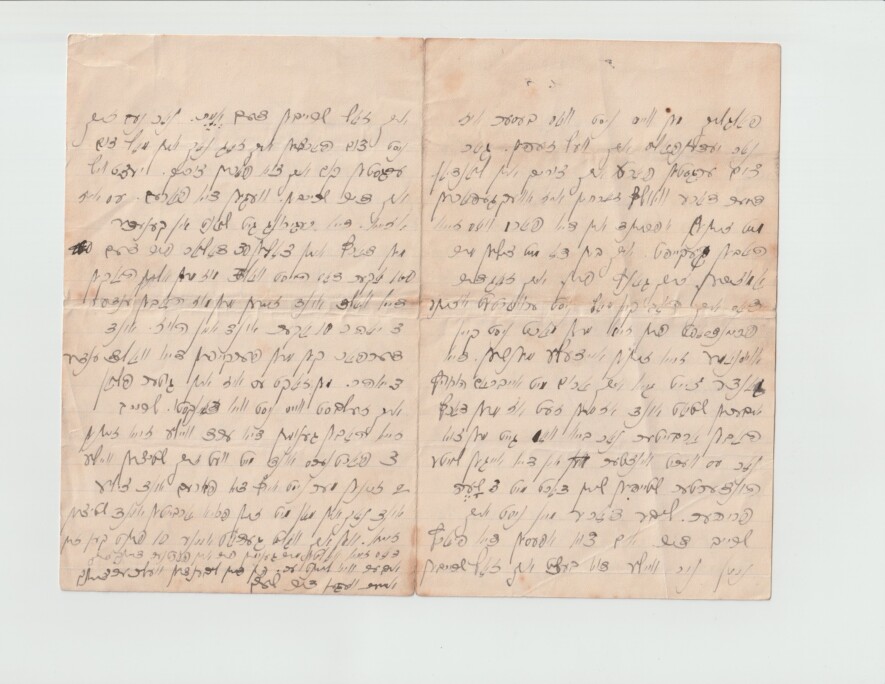
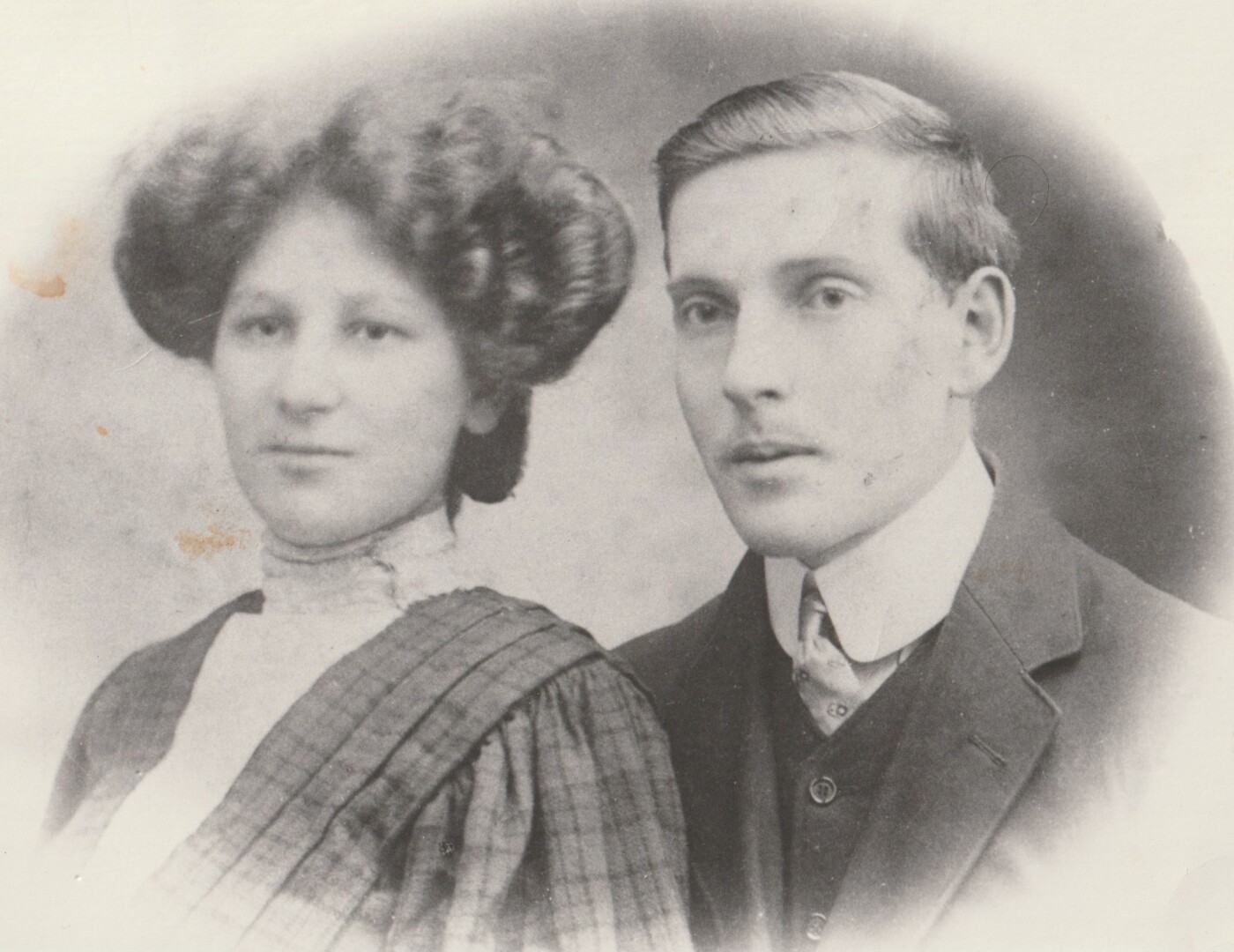
Paul Levine’s great grandparents, Sam and Dora Diamondstein. | Courtesy of Paul Levine
According to retired graphic designer Paul Levine, the creator of the interactive online archive A Box of Letters, after his brother’s death in 1999 he received a box of letters as a family heirloom.
His interest was piqued when he went through the box and discovered that nearly half of over 100 letters and postcards dating from 1900 to 1926 between his great grandparents, Sam and Dora Diamondstein, were in Yiddish.
“My great-grandparents’ entire courtship existed nowhere except in a language nobody in the family could still access,” says Levine. He notes that’s not rare for Jewish families descended from immigrants.
“The letters survive physically, but the ability to read them dies out a generation or two before anyone thinks to do anything about it.”
Retracing his ancestor’s steps
Levine says he began experimenting with AI to see if it could read his grandparents’ handwriting. He ran every page through multiple independent transcription systems and compared them line by line with technologist Fernando Medrano.
“It was only once we had all hundred-plus letters transcribed, translated, and laid out in order,” says Levine, “cross-referenced against genealogical records, that an actual narrative emerged.”
He discovered that Sam left Latvia in 1901 and spent “most of a decade” working for “bare subsistence wages” in Montreal. He told a hiring office he was an Austrian Christian after previously being turned away for being Jewish. He was weighing whether to take a Canadian government grant to create a prairie homestead when the Panic of 1907 left Sam “completely broke” in Canada.
Eventually, Levine says Dora had to send Sam money to return to England where they married and were able to build a life around the fur trade business they established there.
“None of that survived as a family story,” says Levine. “It only survived as his own words, in the moment, in a language nobody could read. Once I realized AI could help unearth this amazing story, I was fully intrigued to unlock the mystery contained in the letters.”
A late re-introduction
Levine recalls he had only known Sam and Dora “the way you know your great-grandparents when you’re a small child.”
“They weren’t people who talked very much, certainly not about themselves,” says Levine. “To me, they were just quiet, kind, old-fashioned presences at family gatherings.”
Discovering and translating the letters, says Levine, “was like meeting a completely different version” of his great-grandparents.
“The quiet old man I knew had once been a scared twenty-something lying about his religion to get hired,” says Levine. “Weighing whether to homestead on the Canadian prairie, writing home night after night that he missed Dora unbearably and couldn’t stop thinking about her.”
“The letters gave me an entire interior life for two people I’d only ever experienced as quiet old people,” says Levine. “I got to actually meet them, experience their lives as young people, decades after they were gone.”
A new way to learn family histories
Levine points out the real finding isn’t how AI can transcribe old handwriting – but that the “honesty architecture” around the system matters more than what is transcribed.
“AI, given a hard page to read, will guess, confidently, rather than admit it doesn’t know,” says Levine, “and a confident wrong guess doesn’t look like an error, it looks like history.”
Levine says the idea behind the model he and Medrano built was to not trust a single system. Instead, he says, they marked everything uncertain as uncertain and kept every claim traceable back to the original page.
“If that discipline gets adopted,” says Levine, “this kind of work becomes something two people can do in a few weeks with consumer tools. That could mean a lot of family archives that would otherwise stay sealed forever actually getting read.”
For more information, go to: aboxofletters.com/


Comments will load once you reach the end of the article.